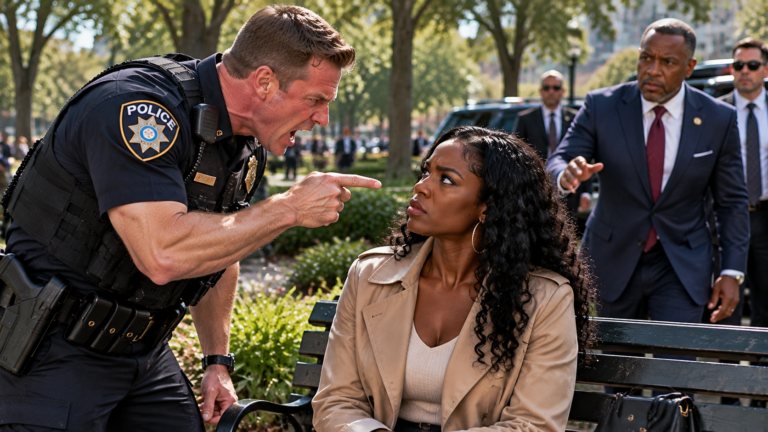
For a moment, I forgot how to breathe.
Arthur’s finger remained pointed at me.
Thirty-six people turned.
I stood beside Evelyn’s chair with her cold hand wrapped around mine, wearing an apron with a torn seam and shoes I had been meaning to replace for six months.
Four million dollars.
I had checked my bank balance that morning to decide whether I could afford a new winter coat.
“You’re lying,” I whispered.
Arthur smiled.
“Then you won’t object to Mr. Russo checking.”
Scarlett looked at me.
The terror in her face changed.
Not completely.
But enough.
She had found somewhere to put it.
“Oh, Anna,” she said softly.
The sound of my name in her mouth made me feel ill.
Matteo looked at me.
I waited for the order.
For security to close around me.
For someone to take my phone and search the small room I occupied behind the laundry.
Instead, he asked, “Do you have a trust account?”
My stomach dropped.
“Yes.”
A murmur traveled around the table.
Arthur lowered his hand.
I understood then why he looked so comfortable.
He had not invented every part of the lie.
“My mother died when I was nineteen,” I said. “There was an insurance payment. My aunt helped put part of it into an account for me.”
“How much?”
“Thirty-one thousand dollars.”
Mrs. Sterling shifted in her chair.
Arthur did not.
“And how much is in it now?” he asked.
I looked at him.
“I don’t know.”
He spread his hands as though I had confessed.
“Anna,” Matteo said.
I turned toward him.
His expression was hard to read.
“Why don’t you know?”
“Because I used some for school. Some for my aunt’s funeral. There are fees. Statements. I haven’t looked since—”
My voice caught.
Since the week I started working here.
Since Scarlett asked for all my financial information as part of the employment review.
I looked at her.
She looked away.
Matteo saw.
“What?”
I swallowed.
“Miss Scarlett said the household required a full financial disclosure.”
His eyes moved to her.
Scarlett shook her head.
“Routine screening.”
“Including trust documents?”
“We employ people in our home, Matteo. We have to be careful.”
Evelyn’s grip tightened.
Then she spoke.
“Your home?”
Scarlett went still.
Evelyn pushed back her chair.
I tried to help her.
She shook her head.
Not unkindly.
She wanted to stand on her own.
“This house was mine before you chose the curtains,” she said. “And I have not agreed to leave it.”
Arthur glanced at his watch again.
Matteo noticed.
“What happens at midnight?”
“Possession transfers.”
“According to a document I did not sign.”
“The bank received instructions. The purchaser paid. Your employee received the money.”
Matteo looked down at the deed.
Then toward the doors.
“Dinner is over.”
Nobody moved.
He waited.
Chairs began to scrape.
Arthur remained seated.
“So now you hide the witnesses?”
“No,” Matteo said. “They can give their names to my attorney before they go.”
The room emptied slowly.
People avoided my eyes.
A woman who had complimented the flowers twenty minutes earlier stepped around me as though accusation were something she might catch.
When the last guest left, Matteo turned to his security chief.
“Paul. Nobody touches Anna’s phone or belongings. Nobody questions the staff without explaining what is happening.”
Arthur gave a quiet laugh.
“You’re remarkably trusting.”
Matteo looked at him.
“I’m trying to avoid becoming remarkably stupid.”
He picked up his phone.
This time, he called his attorney.
Evelyn sat down.
Her strength seemed to leave her all at once.
I knelt beside her chair.
“Are you all right?”
“No,” she said.
The honesty frightened me.
Then she touched my cheek.
“But neither are you.”
My eyes filled.
I had been trying not to cry because I knew how tears would look.
Guilty.
Weak.
Unreliable.
Evelyn seemed to understand.
“You can be frightened,” she whispered. “It doesn’t make him right.”
Across the table, Arthur closed his watch.
For the first time, he looked annoyed.
The attorney arrived at eleven fourteen.
I remembered the time because I kept looking at the clock, waiting for midnight to become something terrible.
Her name was Rebecca Hale.
She wore a dark coat over an ordinary gray suit and carried a briefcase that had clearly been used for years.
She listened.
She examined the deed.
Then she looked at Matteo.
“When you said the signature was an exact match, did someone verify that?”
“No.”
“Then we will call it what it is. A signature that resembles yours.”
He nodded.
She turned to Mrs. Sterling.
“I need the complete closing file. Not a folded copy from your handbag.”
Mrs. Sterling’s mouth tightened.
“My office—”
“Call them.”
“It’s late.”
Rebecca looked at the clock.
“You purchased an occupied property with a midnight delivery requirement. Your office can answer the telephone.”
Arthur leaned back.
“You’re treating an ordinary transaction as a crime.”
Rebecca glanced at him.
“I’m asking for the papers that make it ordinary.”
Mrs. Sterling reached for her phone.
Rebecca then asked me whether I had an attorney.
I shook my head.
“I can’t afford—”
“We will arrange independent representation. I represent Mr. Russo. You need someone who represents you.”
I looked at Matteo.
He nodded.
“Independent,” he said.
Not someone who worked for him.
Not someone who would tell him what I said.
I had not realized how badly I needed that distinction until he made it.
A little before eleven thirty, a van stopped outside.
Then another.
I saw the headlights move across the dining room windows.
Arthur stood.
“Our transport is here.”
Evelyn stared at him.
“My transport?”
Scarlett pressed both hands against the table.
“It was arranged for your comfort.”
Evelyn looked at her.
“Where am I going?”
No one answered immediately.
Matteo’s voice went flat.
“Scarlett.”
“A care center. Temporarily. Until we organized something more suitable.”
“Did she agree?”
“She was going to be difficult about it.”
The words slipped out before Scarlett could stop them.
Evelyn’s face changed.
I had seen her endure a great deal that evening.
The insult about her coat.
The announcement that her home had been sold.
The realization that both her sons’ names had been used in arrangements nobody explained.
But that sentence hurt her differently.
She was going to be difficult.
As though her objection had already been classified as a symptom.
Rebecca stepped into the hallway and spoke to Paul.
The drivers were asked to wait outside while the situation was clarified.
They were ordinary men doing an ordinary job.
They had been told an elderly resident was moving voluntarily.
One carried a clipboard.
Her supposed consent was attached.
Rebecca brought the copy inside.
Evelyn put on her glasses.
Read it.
Then looked up.
“I have never seen this.”
Arthur said nothing.
Scarlett sat down abruptly.
The document described Evelyn as unable to make independent living arrangements.
It referred to an assessment nobody at the table could identify.
I remembered the visiting nurse from the previous week.
Not because she had examined Evelyn.
Because she had not.
She had sat in the drawing room drinking coffee with Scarlett while I brought Evelyn lunch upstairs.
I looked at Rebecca.
“There was a woman here last Tuesday.”
Scarlett’s head snapped toward me.
“Anna.”
I kept looking at the attorney.
“Miss Scarlett said she was here about Mrs. Russo’s care.”
“What happened?”
“I took coffee into the drawing room. Then I took lunch upstairs.”
“Did you see an assessment?”
“No.”
“Then that is what you can tell us.”
Rebecca’s voice was calm.
She did not ask me to turn suspicion into certainty.
I was grateful.
Outside, the drivers returned to their vans.
No one dragged anyone through the doors.
Midnight arrived.
The clock chimed.
Evelyn remained in her own chair.
Arthur stopped looking at his watch.
My attorney called just after midnight.
Her name was Denise Patel.
She asked me to move somewhere private.
Matteo offered the study.
I chose the little sitting room beside the kitchen.
It was a room I knew.
I wanted familiar walls.
Denise asked about the trust.
My mother.
My aunt.
The documents Scarlett requested.
Then she asked me to look at my own records.
Not send passwords.
Not hand over access.
Just tell her what I could see.
My balance was not four million dollars.
It was a little under eighteen thousand.
I read it aloud twice.
Denise remained quiet for a moment.
“Has that balance changed significantly today?”
“No.”
“Any notice of an incoming payment?”
“No.”
I began to cry.
Relief came out of me so suddenly that I could not stop it.
But Denise did not celebrate.
“We still need the institution to confirm the account details,” she said. “This is important, Anna. A document bearing your name does not prove you received money. We will establish what happened.”
I wiped my face.
“All right.”
“Did Scarlett ask for copies of your identification?”
“Yes.”
“Your trust statement?”
“Yes.”
“Did you question why?”
I stared at the worn edge of the sofa.
“No.”
“That is not your fault.”
I pressed my hand over my mouth.
She let me breathe.
When I returned to the dining room, Matteo stood near the fireplace.
He looked at my face.
“What did she say?”
“My account hasn’t changed.”
Arthur gave a small shrug.
“People have more than one account.”
I turned toward him.
I had spent the evening trying to speak quietly enough that nobody could accuse me of losing control.
Now I was tired.
“Then name it.”
He looked at me.
“The account,” I said. “You keep saying the money went to me. Tell me the bank. Tell me the number. Tell me something I can actually answer.”
Arthur’s expression hardened.
Rebecca held out her hand.
“The payment confirmation, Mr. Whitmore.”
He hesitated.
Then he reached into his jacket.
I watched him produce the paper he had apparently been waiting all evening to use.
Rebecca read it.
Then passed it to Denise electronically through the agreed legal channel.
Nobody asked me to defend myself against a name printed on a page.
For the next hour, the people who understood those pages did their work.
And for the first time that night, Arthur could not control the pace.
Dominic arrived at one twenty in the morning.
Matteo’s younger brother entered through the side door with his coat half buttoned.
He stopped when he saw Rebecca.
Then Evelyn.
Then the deed on the table.
“What happened?”
Matteo stood.
“You tell us.”
Dominic looked at Arthur.
Only for a second.
Long enough.
“Mother,” he began.
Evelyn raised a hand.
“Sit down.”
He sat.
I had never seen him obey her so quickly.
Rebecca asked about the sale.
Dominic said he had helped organize a review of family property.
He said Scarlett had been handling the details.
He said Arthur had explained that the estate’s upkeep was becoming unreasonable.
Evelyn listened without interrupting.
Then she asked, “Did you intend to tell me before or after the vans arrived?”
Dominic lowered his eyes.
Matteo moved away from the fireplace.
“Look at me.”
His brother did.
“Did you know I hadn’t signed?”
“I didn’t see you sign.”
“That wasn’t the question.”
Dominic’s breathing grew shallow.
Arthur stepped forward.
“This is becoming theatrical.”
Rebecca turned toward him.
“Then stop interrupting.”
He stared at her.
She waited.
Dominic looked down at the deed.
“Scarlett said you had approved the property decisions before you became ill.”
Matteo’s face tightened.
“Did you ask me?”
“No.”
“Why?”
His brother said nothing.
Evelyn answered.
“Because he knew you would say no.”
Dominic covered his face.
Matteo stood very still.
I thought he might explode.
Instead, he pulled out the chair opposite his brother and sat.
“What did you owe?”
Dominic looked up.
Arthur stopped moving.
The question had found something.
Matteo saw it.
“How much?”
Dominic shook his head.
“Not here.”
Evelyn’s voice was quiet.
“Apparently everything concerning my home was discussed somewhere else. We will discuss it here.”
His debts were not the entire explanation.
But they were the beginning.
A failed investment.
Money borrowed to hide the loss.
More money borrowed to cover the first loan.
Arthur had helped him.
Then Arthur had begun asking for favors.
Access to old files.
Introductions.
Permission to handle matters Dominic did not want Matteo examining.
By the time the house sale was proposed, Dominic was no longer asking enough questions to protect anyone.
“I thought we could replace the money,” he whispered.
Matteo looked at him.
“With Mother’s house.”
Dominic began to cry.
Evelyn did not move toward him.
I understood how much that cost her.
She had spent a lifetime answering her sons’ pain.
Tonight, one son had helped cause hers.
The first confirmed banking information arrived the following morning.
The four million dollars had not gone into my personal trust.
It had been sent to a separate entity carrying a similar name and using copied personal information.
The documents that identified me as its beneficiary did not establish that I had created it, controlled it, or received anything from it.
Further records showed who had instructed the payment.
Arthur’s office.
Rebecca read the confirmation once.
Then called the investigator already reviewing the suspected fraud.
Arthur had left before dawn with his attorney.
He had not been chased.
He had not been threatened.
He had been told the documents would be preserved and the matter referred outside the family.
He looked more disturbed by that than he had by Matteo’s threat at dinner.
Scarlett remained upstairs.
The wedding was supposed to begin at four.
At nine, Matteo instructed the planner to cancel it.
Not postpone.
Cancel.
Guests were notified.
Vendors were contacted.
Flowers continued arriving for an event that no longer existed.
I watched a deliveryman carry white roses into the hallway.
He looked around.
“Where would you like these?”
Evelyn stood beside me in the same old coat Scarlett had wanted removed.
She considered the flowers.
“Can the hospital use them?”
The deliveryman blinked.
“I can ask.”
“Please do.”
She went back into the kitchen.
I followed.
She had not slept.
Neither had I.
Matteo found us there a few minutes later.
He looked exhausted.
His phone had been ringing almost continuously.
He switched it off.
Then he looked at me.
“I’m sorry.”
I did not know what to do with the apology.
“For what?”
“For the fact that someone thought they could use this house to do that to you.”
I looked toward the hallway.
“You didn’t accuse me.”
“No.”
“That mattered.”
His expression changed slightly.
He nodded.
Then Evelyn pushed a plate toward him.
“Eat.”
He looked down at the toast.
“Mother—”
“I have been sold, relocated, and declared incapable without being consulted. I would like one instruction obeyed this morning.”
He sat.
He ate.
And for the first time since Arthur pointed at me, I laughed.
It came out unevenly.
Evelyn smiled.
Matteo looked at us both.
Then his shoulders lowered.
The investigation into the deed was more complicated than the dinner conversation.
The signature was not evidence that Matteo had somehow agreed while unconscious.
It was evidence that needed examining.
The complete file contained inconsistencies.
The supposed signing appointment did not match his medical records.
The person who claimed to have witnessed it gave an account that could not survive the first round of questions.
The documents used to authorize the sale did not provide the authority Mrs. Sterling said she had relied on.
And the house’s ownership arrangements required consent that Evelyn had never given.
There would be no simple declaration over breakfast that settled everything.
There were filings.
Requests to prevent further action.
Questions about the money.
Questions about whether Mrs. Sterling had ignored warnings because the price was attractive.
Rebecca explained each step to Evelyn.
Evelyn asked questions until she understood.
Matteo waited.
Sometimes impatiently.
But he waited.
The collapse on October fourteenth was reviewed separately.
His physicians examined his treatment records and the unexplained events surrounding the emergency.
The dinner had raised suspicions.
It had not proved the cause.
Matteo wanted answers immediately.
His doctor told him that wanting them did not make the evidence arrive faster.
He listened.
I saw how much he disliked it.
I also saw him continue listening.
A week later, Denise asked whether I remembered signing anything after I accepted the job.
Employment forms.
Confidentiality papers.
Bank details for wages.
A packet Scarlett said concerned staff insurance.
I had kept copies.
Not because I suspected anything.
Because my mother taught me that paper was easier to keep than to replace.
They were in a blue folder beneath my spare sweaters.
Denise reviewed them with me.
Several pages were ordinary.
One was not.
It referred to authority I had never knowingly granted.
The copy in my folder differed from the version submitted elsewhere.
I stared at the two pages.
Same heading.
Different content.
My signature appeared beneath both.
For several seconds, I felt foolish.
Then angry.
“She stood beside me,” I said.
Denise looked up.
“Scarlett?”
“She told me where to sign. She said the printer had put the pages in the wrong order.”
Denise made a note.
“I remember being embarrassed,” I continued. “Because I thought I was taking too long.”
She put down her pen.
“Anna, they relied on you trusting the person who was hiring you.”
I looked at the copies again.
For years, I had thought being careful meant not losing documents.
Now I understood it could also mean refusing to be hurried.
I gave my statement.
Then I bought a larger folder.
Scarlett asked to speak to me before she left.
I almost refused.
Then I agreed, provided Denise was present by phone.
We met in the drawing room with the door open.
Scarlett wore a pale sweater.