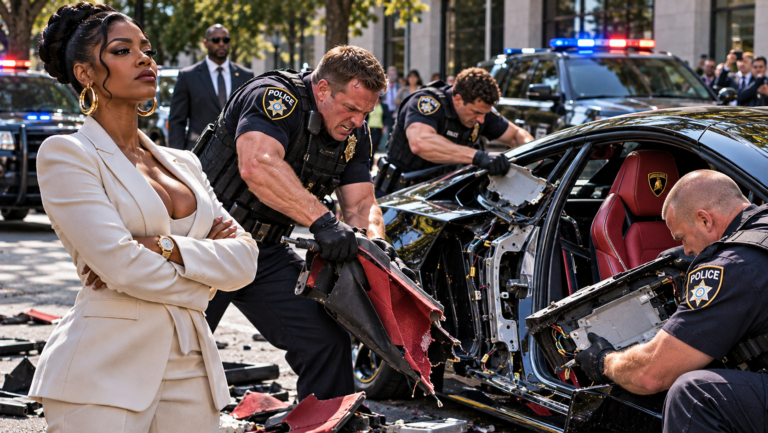
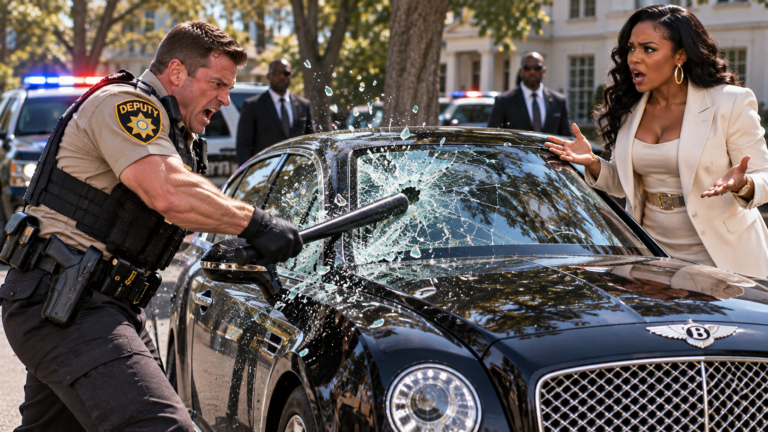
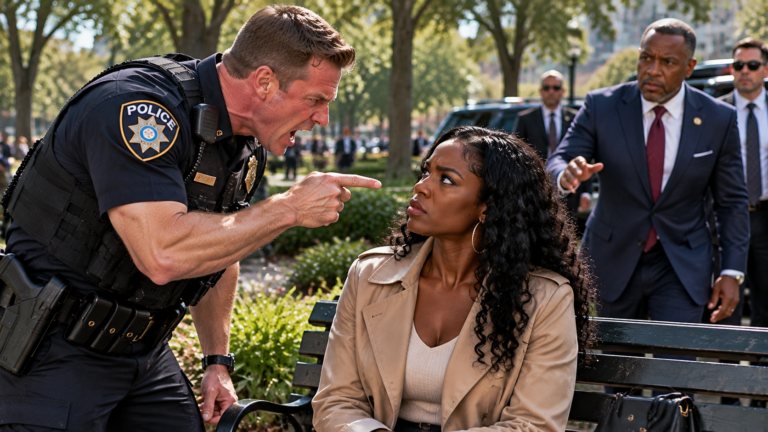
The investigation began the following morning.
Internal affairs reviewed Crowley’s body-camera footage, dispatch records, impound reports, and communications related to the stop.
Simone provided the authorized security recording from her vehicle.
The footage captured the demand for four thousand dollars.
It showed Crowley refusing to provide a written basis for the alleged violation.
And it recorded his attempts to prevent the rookie from documenting the magnetic device.
The investigators also reviewed the earlier incidents involving Whitaker Executive Mobility.
Several vehicles had been impounded following questionable registration allegations.
The records repeatedly listed the same private towing company.
Ridgeway Recovery Services.
The company operated a storage yard outside the county seat.
Its owner, Douglas Ridgeway, was a longtime acquaintance of Deputy Crowley.
The relationship was not automatically unlawful.
But investigators found that the towing company had received a disproportionate number of impound referrals from Crowley’s patrol area.
Some vehicles had been held for unusually long periods.
Others had accumulated significant storage charges before being released.
A few owners alleged that they had been offered informal cash settlements to recover their cars more quickly.
The allegations were serious.
But investigators needed documentary evidence.
So they began examining the tow yard’s financial records.
And what they discovered would transform the case.
Chapter 10: The Money Trail
Financial investigators reviewed the available records through appropriate legal procedures.
They examined towing invoices, storage charges, vehicle release forms, and bank transactions.
Several patterns emerged.
Certain impounded vehicles had no corresponding citation supporting the seizure.
Some towing records contained inconsistent dates.
And several cash payments were recorded without clear explanations.
The investigators also found transactions between Ridgeway Recovery Services and accounts associated with individuals connected to the sheriff’s department.
Not every transaction was suspicious.
Some appeared to involve legitimate services.
But others required further examination.
The investigation expanded.
Auditors began comparing the tow company’s financial records with official impound logs.
They identified possible overcharging, improper referrals, and discrepancies in the handling of seized vehicles.
Simone’s earlier complaints became important.
Her company had preserved invoices, correspondence, and detailed timelines for each affected driver.
Those records helped investigators determine where the official explanations differed from what actually happened.
The case was no longer about one roadside demand for four thousand dollars.
It had become an inquiry into whether a network of people had used law enforcement authority to profit from vehicle seizures.
Chapter 11: The Rookie Who Refused to Change His Story
Noah Bennett was interviewed several times.
He described the stop carefully.
He did not exaggerate.
He did not claim to know what Crowley was thinking.
He simply stated what he had observed.
The demand for cash.
The lack of a verified registration violation.
The order to delete the photograph.
And the older deputy’s attempts to prevent supervisory review.
Investigators compared Noah’s account with the recordings.
His statement was consistent with important parts of the evidence.
But speaking up came at a cost.
Some colleagues began treating him differently.
A few avoided sitting beside him during briefings.
Others suggested he should have supported his training officer.