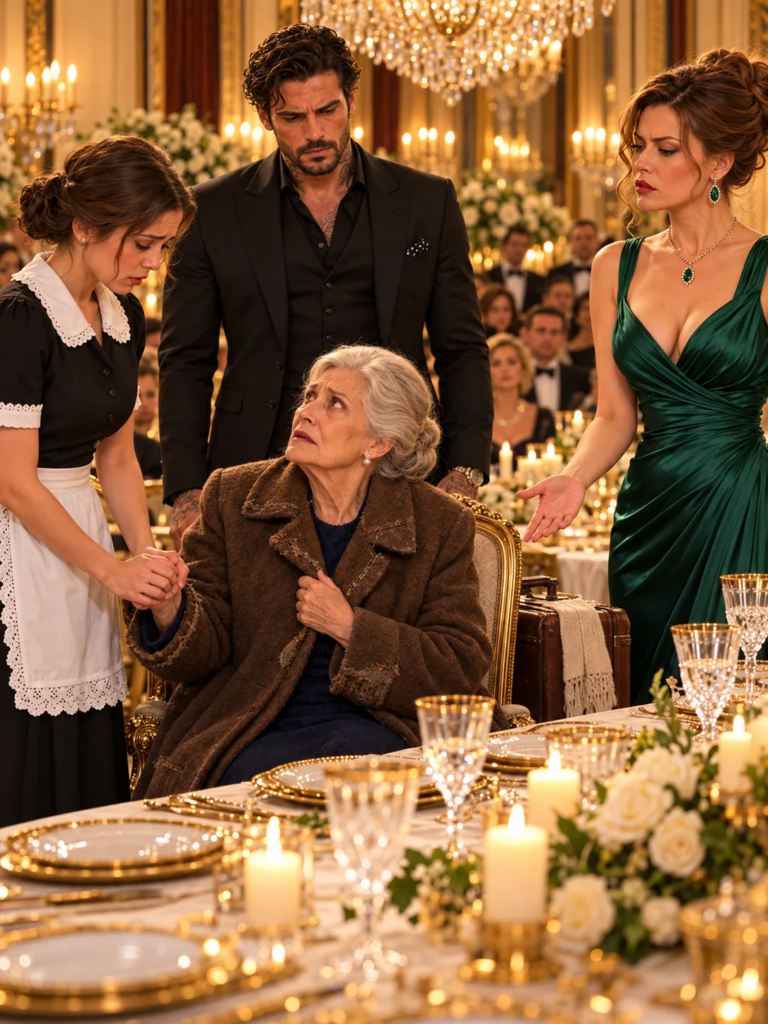
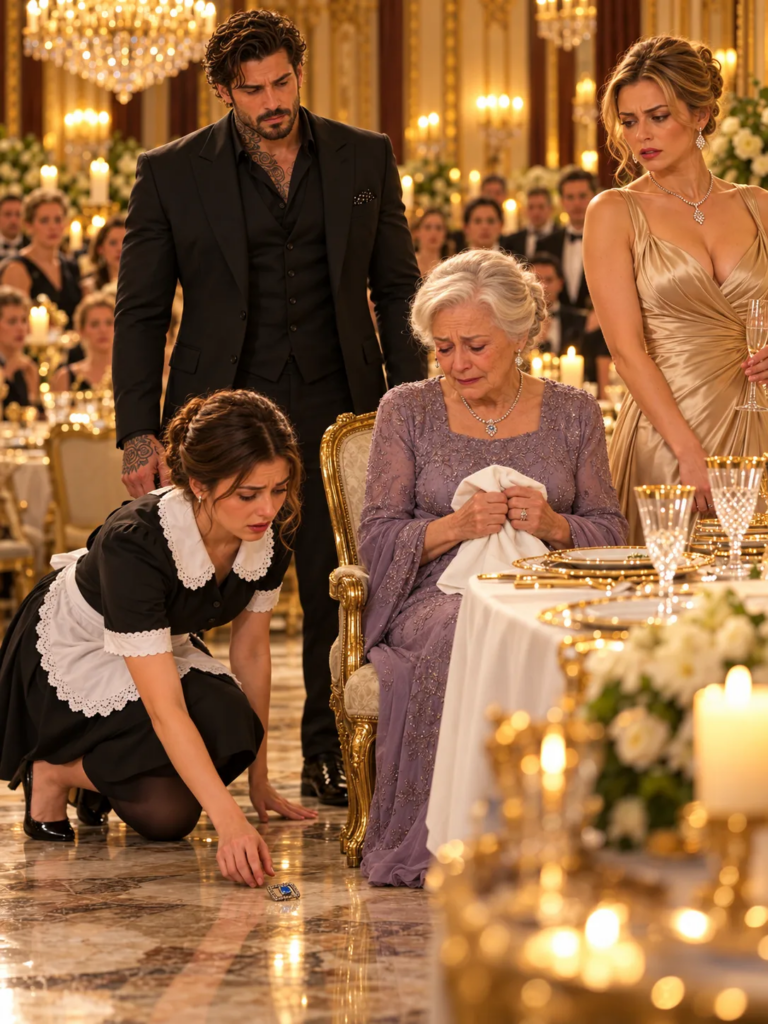
For a moment, she looked eighty.
Then she straightened.
“I am not ashamed of my son.”
Noah looked down.
She reached across the table.
“I was ashamed of how he came into the world. That was my mistake. I let it become something he had to carry.”
“Mom—”
“No. Let me finish.”
He did.
She turned toward Adrian.
“I hurt your mother. Your father hurt her. I won’t pretend otherwise.”
Adrian held her gaze.
“But she did not spend the rest of her life being only a woman who was hurt. She made decisions. She was angry. She was generous when she chose. Sometimes she was neither.”
June’s voice softened.
“Please don’t let them turn her into someone who existed only to forgive me.”
The room was silent.
Adrian looked toward the old cabinet beside the window.
For years, his mother had existed in public as a photograph beside a charity plaque.
Perfect.
Beautiful.
Gone.
Now June was asking him to let her be human.
“All right,” he said.
June nodded.
“Then I will speak for myself.”
She did not hold a press conference.
She invited one reporter to the cottage.
Her attorney attended.
Noah stayed because she asked him to.
Adrian did not.
June explained the debt, the threats, and what she could prove.
She acknowledged Noah as her son.
She declined to provide details about his wife, daughter, or home.
When asked about Marian, she took a long moment before answering.
“I wronged her,” June said. “I have lived with that knowledge. But a woman’s worst decision is not permission to take her home when she is eighty.”
I read that sentence three times.
Then I cut the article from the paper and placed it in a drawer.
I was not sure why.
Perhaps I wanted to remember the day she stopped speaking as though she needed permission.
Adrian postponed his campaign announcement.
People assumed it was because the story had damaged him.
Perhaps it had.
But I was in the study when he explained it to the adviser.
“I spent years not knowing the name of the company that held June’s mortgage.”
“That isn’t relevant to city council.”
“I knew the names of every donor you wanted seated beside me.”
The adviser looked away.
Adrian continued, “I need to examine what I’ve been willing to overlook before I ask strangers to trust me.”
He did not become admirable overnight.
He remained impatient.