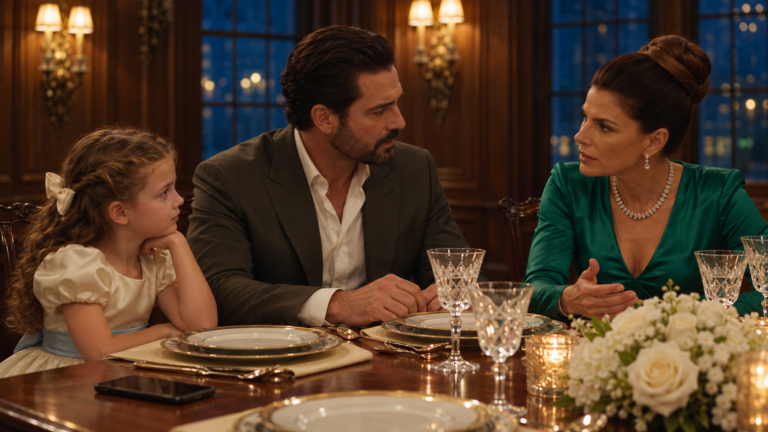
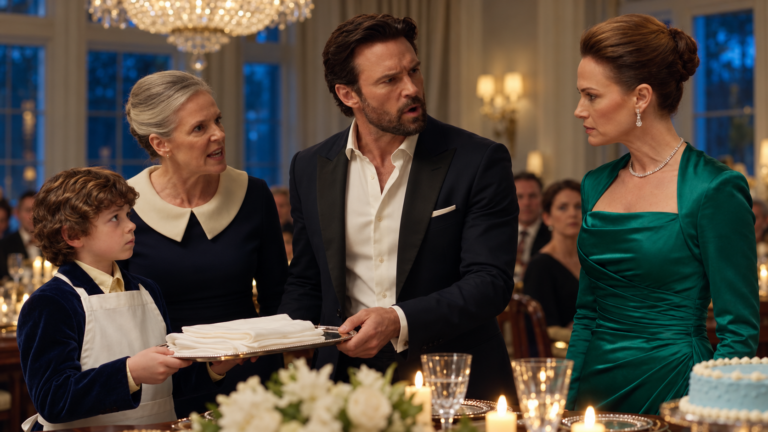
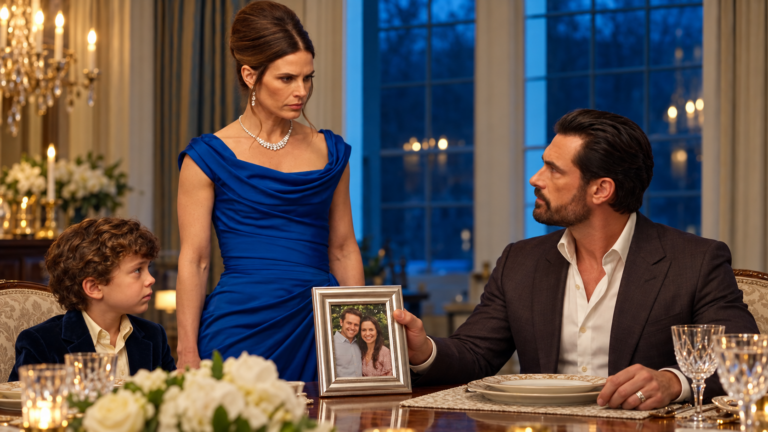
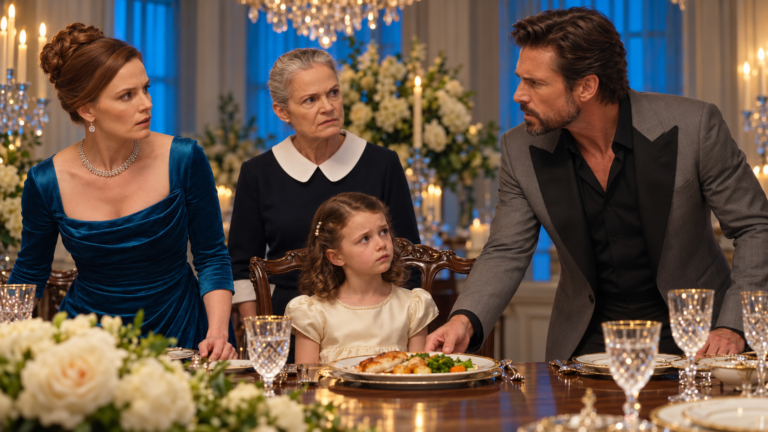
For several minutes, she avoided the question.
Then she said:
“I wanted to see whether she would return it.”
He stared.
“You put it in her pocket.”
“I wanted to know whether she was honest.”
“Did she know it was there?”
“She should have noticed.”
“Did you tell her?”
“No.”
He leaned back.
“So you created something she didn’t know about, accused her, and locked the door when she denied it.”
Estelle looked toward the window.
“When you say it that way—”
“That is the order you just described.”
She said she never intended to hurt anyone.
He looked at his notes.
“Maisie believed Anna would be taken farther away if she told me.”
Estelle turned.
“She misunderstood.”
“You rehearsed a false explanation.”
“I was trying to avoid a scene.”
Julian closed the notebook.
The scene had been the smallest part.
Anna’s freedom.
Maisie’s trust.
The truth about why a woman disappeared from work.
Those were the things Estelle had been willing to spend to avoid discomfort.
He told her the engagement was over.
There were practical matters.
Belongings.
Accounts.
Wedding arrangements.
Julian handled them through the people responsible without turning the process into a public spectacle.
He did not contact Estelle’s friends to destroy her reputation.
He did not offer to make the report disappear if she cooperated.
The investigation was not his to exchange.
Anna’s statement was not a family asset.
That distinction was tested quickly.
A relative suggested a settlement would be quieter.
Julian asked what the relative meant.
Compensation.
A written apology.
An understanding that everyone could move on.
“Who is everyone?”
The man looked uncomfortable.
Julian continued.
“Anna can make decisions with independent advice. You and I don’t get to decide she should stop reporting something because it embarrasses us.”
The relative said he was trying to protect Maisie.