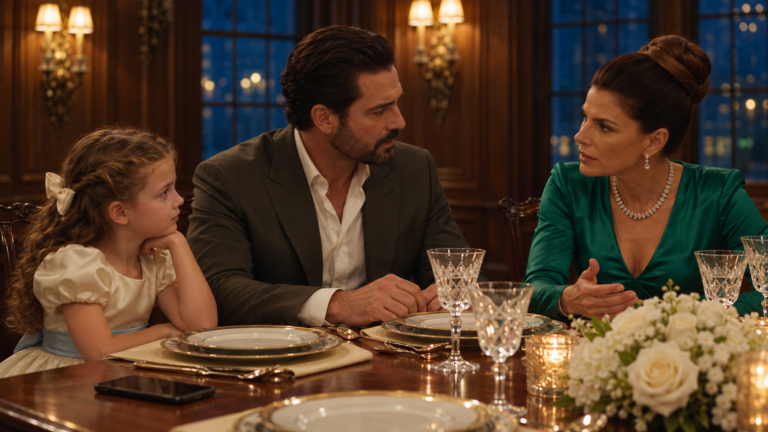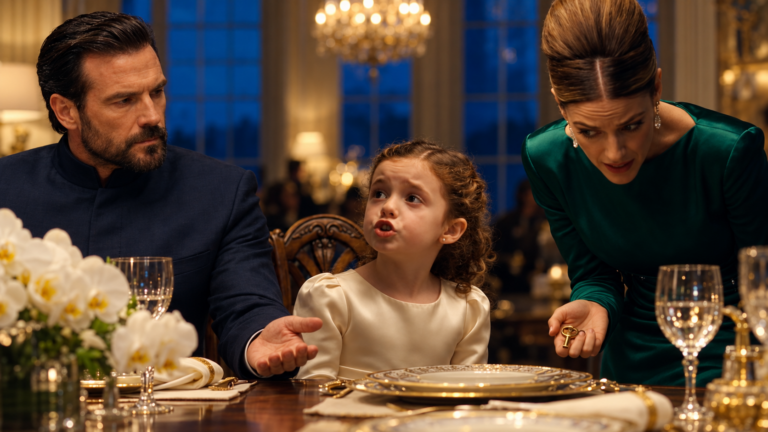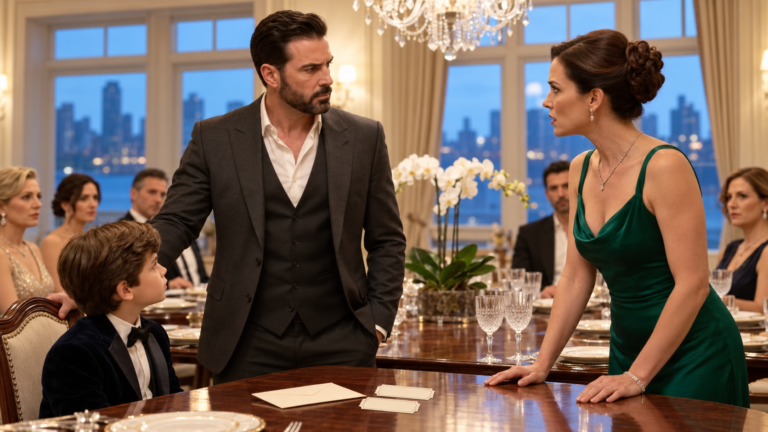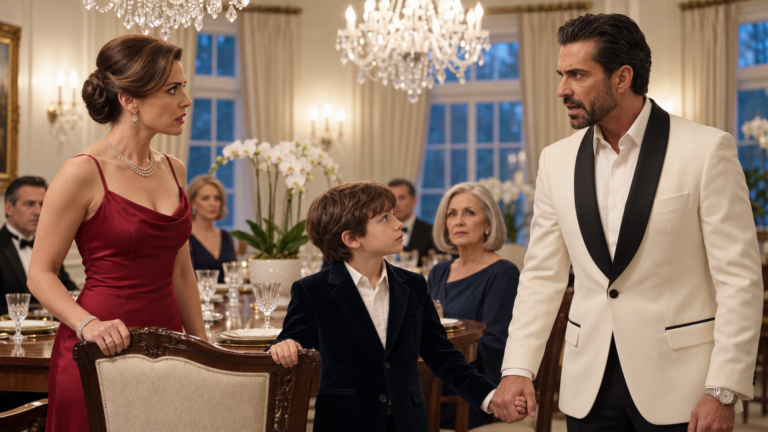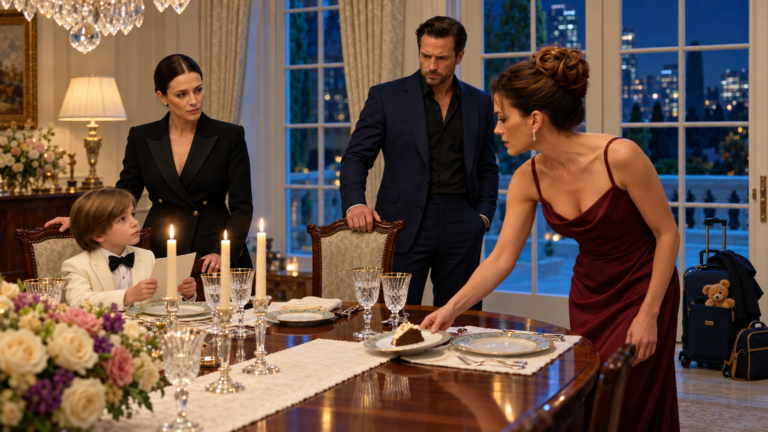
“No dinner until you stop crying.”
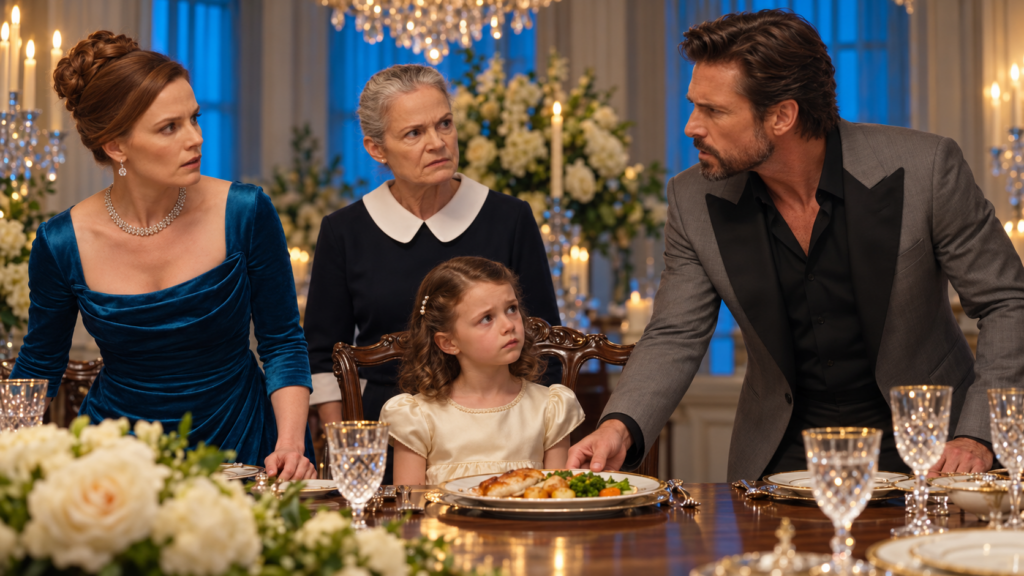
Daphne slid the plate away.
Evie kept her hands in her lap.
Her eyes followed the food, but she did not reach for it.
That was the first thing I noticed.
Not the tears.
The stillness.
A seven-year-old who was hungry enough to stare at a bread roll and frightened enough not to ask for it.
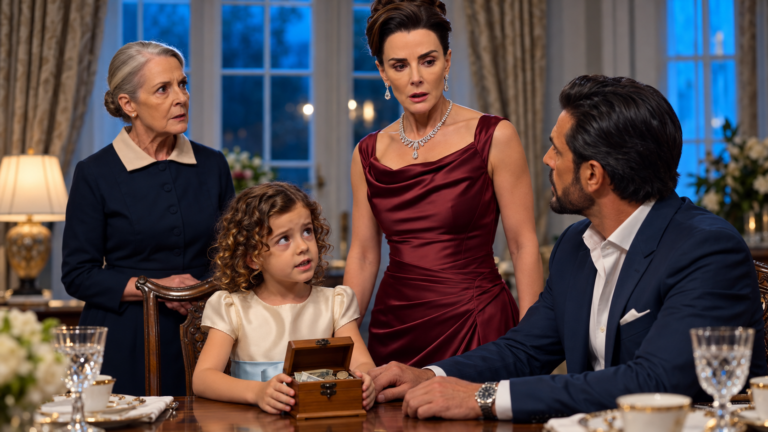
Behind her chair, Ruth spoke.
“She hasn’t eaten since breakfast.”
I turned toward my wife.
“You told me she ate upstairs.”
Daphne pointed at me.
“You told me to teach her manners.”
Then my daughter looked up.
“Dad, do you think I don’t deserve food?”
I moved the plate back in front of her.
Immediately.
Before another question.
Before asking my wife to explain herself.
“No, sweetheart.”
Evie watched my hand.
“You do not have to earn dinner.”
Daphne made a sound of disbelief.
“Conrad.”
I kept my attention on my daughter.
“Would you like your fork?”
A small nod.
I placed it beside her plate.
Her fingers stayed in her lap.
“Can I still if I’m crying?”
“Yes.”
She looked toward Daphne.
I moved my chair closer.
“Yes,” I repeated. “Even while you’re crying.”
Only then did she reach for the bread.
My name is Conrad Vale.
I was forty-four years old.
There were men who changed their plans when they heard I had entered a room.
There were businesses where people knew better than to bring me a problem without an answer already prepared.
For years, I thought that meant I understood what was happening around me.
At home, it meant people learned which version of a problem I preferred to hear.
My wife had been telling me Evie was difficult at meals.
Distracted.
Emotional.
Unwilling to follow ordinary expectations.
I had answered with ordinary-sounding instructions.
Help her settle.
Keep the routine.