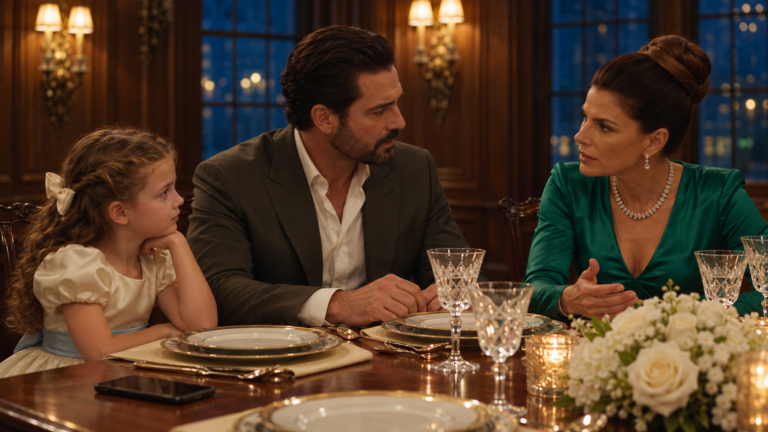
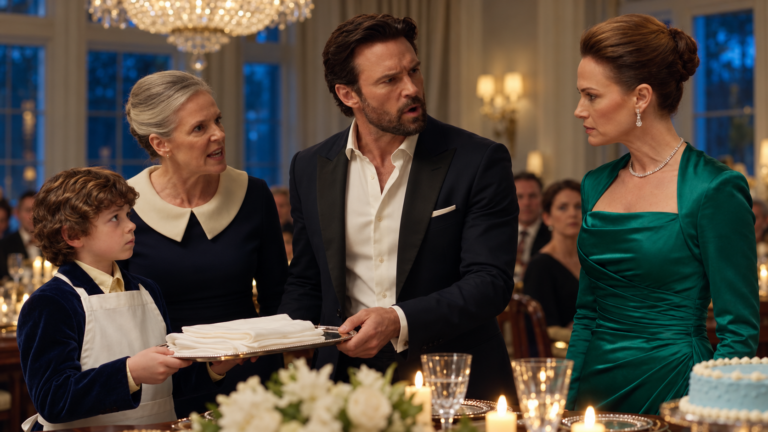
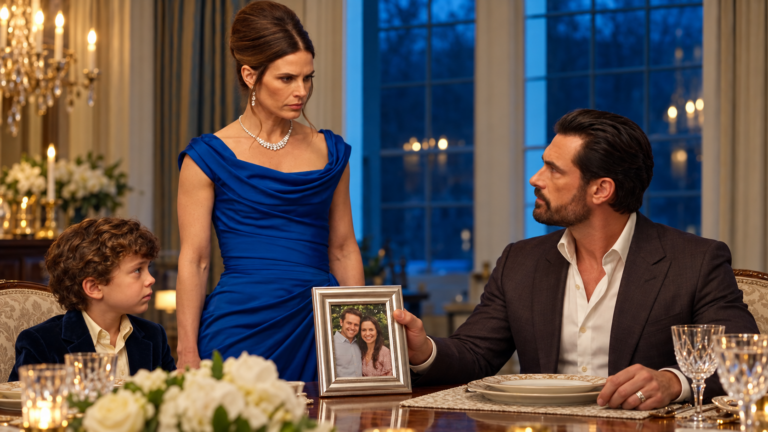
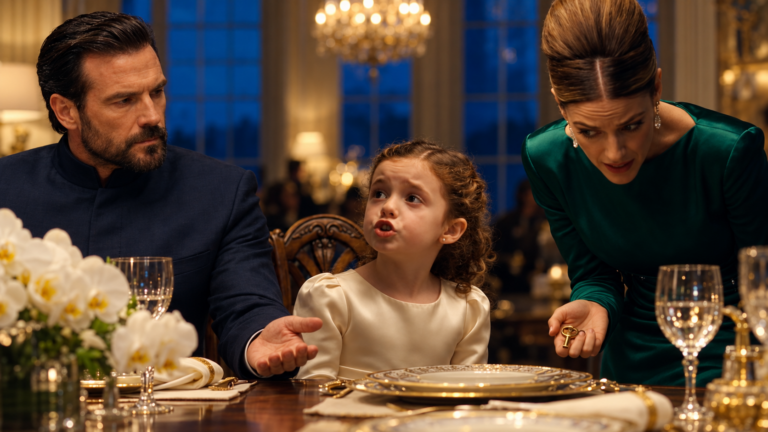
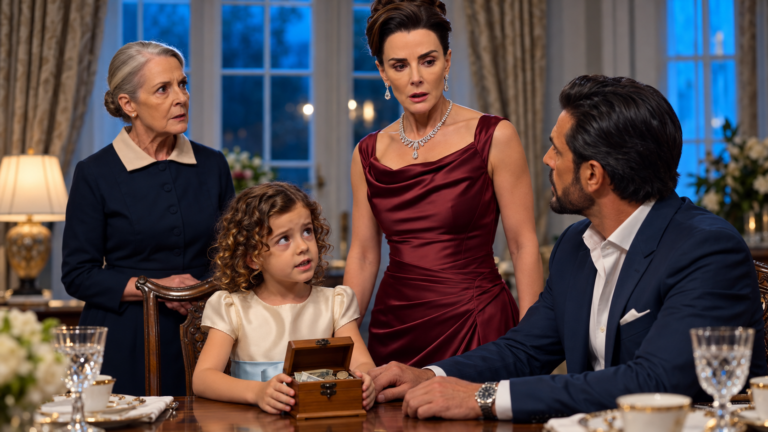
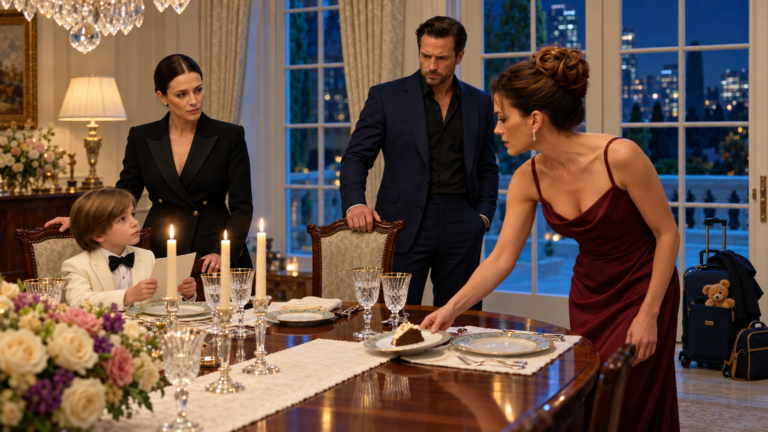
“She moved it.”
A pause.
“My dinner.”
Another pause.
“Dad put it back.”
I looked toward the floor.
That was the whole evening in my daughter’s language.
Two adults.
One plate.
Two different explanations of what she was worth.
Marin came over.
I didn’t ask her to wait until the morning.
Evie wanted her.
That was enough.
While her mother stayed upstairs, I spoke to Daphne.
She waited in the library.
My sister had left.
The house was quiet.
“This has become completely disproportionate,” my wife said.
I remained by the door.
“Tell me what happened at lunch.”
“She refused to eat.”
“Why?”
“She was crying.”
“Did you offer the food while she was crying?”
Daphne folded her arms.
“I told her we would eat when she had composed herself.”
“How long?”
“She kept starting again.”
“What did you do?”
“I gave her time.”
“Without lunch.”
“She could have stopped.”
I looked at her.
There was the entire belief.
A child’s grief treated as a tap she could turn off if sufficiently motivated.
Daphne continued.
“You asked me to bring order into this house.”
“I asked you to help care for my daughter.”
“You said she needed manners.”
“Yes.”
“And when I try to teach them, you humiliate me.”
I sat opposite her.
“Did you tell me she had eaten?”
“She had food available.”
“That wasn’t my question.”
Daphne looked toward the window.
I waited.
Finally, she said: