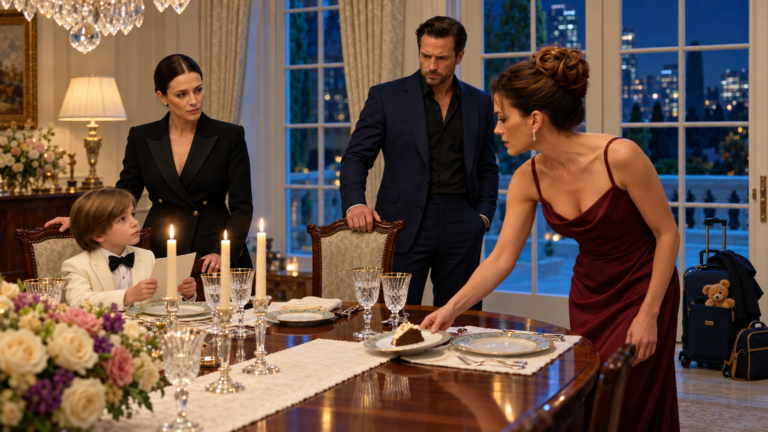
About the lie when I called.
About the way she continued describing my daughter as calculating.
About whether the household could become safe without everyone monitoring the same person indefinitely.
We discussed those questions over several weeks.
Some conversations were honest.
Others returned to blame.
At last, I told her we would separate permanently.
The decision was made between adults.
Evie did not attend.
She did not choose which belongings stayed.
She did not hear the cost of canceled plans.
When I told her, I kept the explanation simple.
“Daphne and I won’t be married anymore. She won’t be coming back to live here.”
My daughter looked at me.
“Because of my plate?”
“Because of decisions the adults made.”
“If I stopped crying, would she still?”
I moved closer.
“You were never responsible for keeping our marriage together by hiding your feelings.”
She considered that.
Then asked:
“Can you be sad and still have dinner?”
“Yes.”
She nodded.
That night, we ate together.
I was sad.
She saw.
The meal still happened.
Marin and I made changes between our homes too.
We stopped asking Evie to carry small messages.
Tell Dad you need the coat.
Ask Mom whether she changed the plan.
Remind her about the form.
None of those requests had seemed serious by themselves.
Together, they taught a child to manage information between adults.
We could do our own communicating.
When plans changed, we told her clearly.
When we disagreed, we resolved it away from her.
She was not asked to make one home sound better than the other.
At her mother’s house, dinner could be soup.
At mine, pasta.
She could dislike either.
She did not need to protect us from knowing.
One Sunday, she announced that I cooked rice badly.
Marin nearly laughed.
I accepted the judgment.
“Too soft?”
“Too everything.”
“I’ll work on it.”