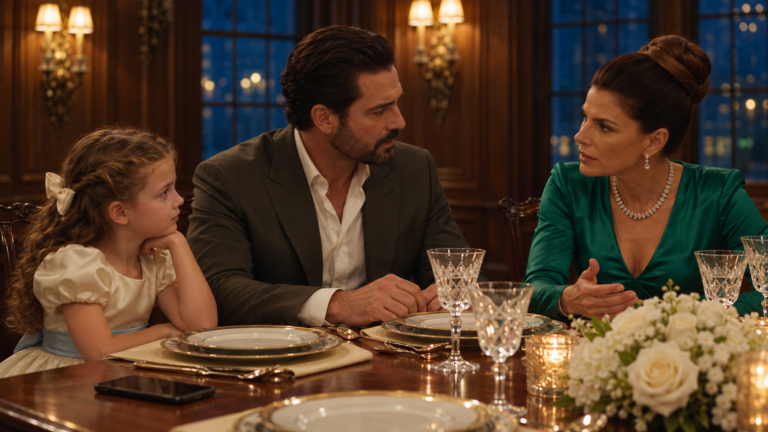
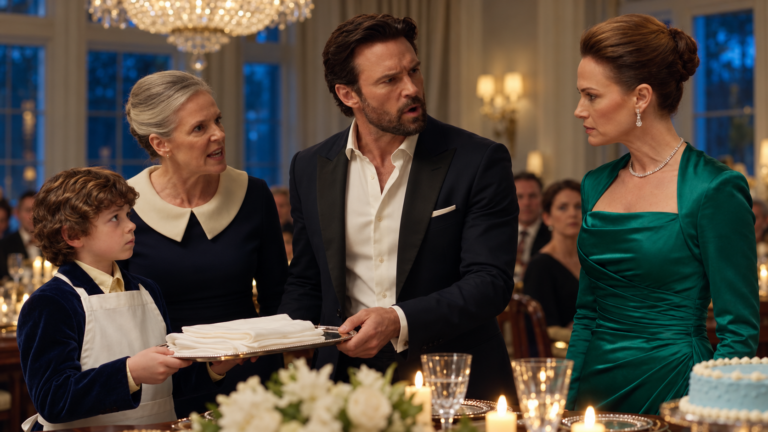
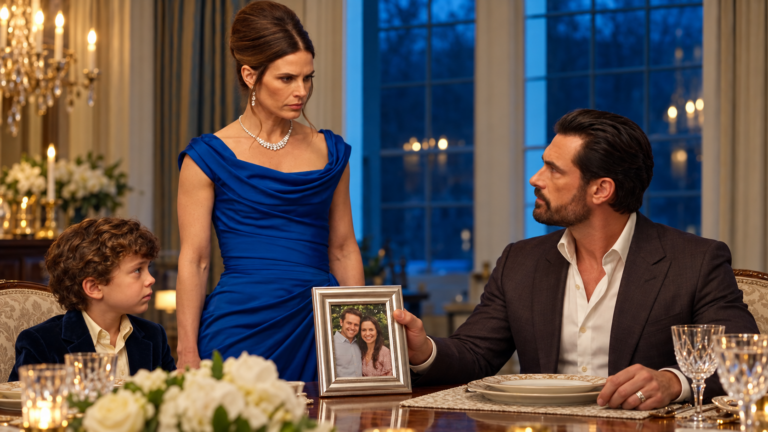
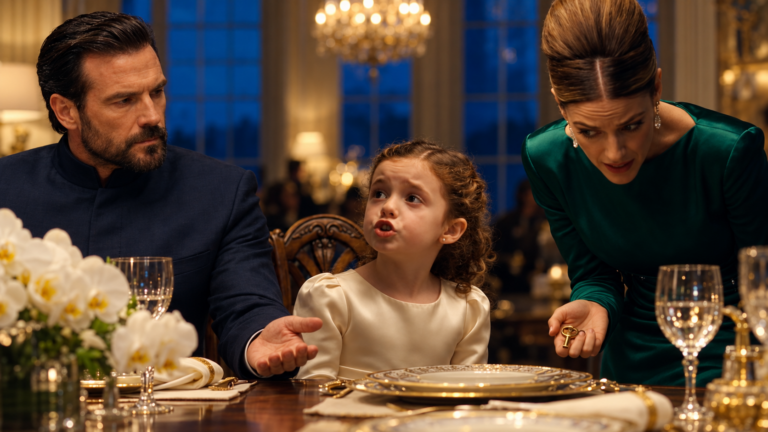
“I knew you would react like this.”
“Because she hadn’t eaten.”
“Because you always rush to rescue her.”
I thought of Evie’s hands remaining in her lap.
I had arrived too late to deserve that accusation.
The lunch tray had been carried upstairs.
Daphne left it on a desk outside Evie’s room.
She told the child she could have it when she was calm.
The girl cried again.
The tray was removed.
Later, Evie asked for a snack.
Daphne said eating between meals would reward refusing lunch.
Those were the facts my wife eventually gave me.
No misunderstanding about the menu.
No cook who forgot.
No child who simply disliked chicken.
An adult had made access to food conditional on emotional control, then used the missed meal as a reason to deny the next request.
“When she asked, did you know she was hungry?”
Daphne gave an impatient breath.
“She says that whenever she wants something.”
I looked at her.
“Food is something.”
“You know what I mean.”
“I’m asking you to be precise.”
“She needed to understand I meant what I said.”
“And what did she understand?”
Daphne did not answer.
I supplied the words I had heard.
“She asked whether I thought she didn’t deserve food.”
My wife looked down.
For a moment, I thought she might finally see the child inside the rule.
Then she said:
“She knows how to make things sound.”
I stood.
“You will stay elsewhere tonight.”
Daphne stared.
“Over one meal?”
“Over what you did, what you concealed, and the fact that you are still blaming her for telling us.”
Marin was waiting in the hall when I came upstairs.
Evie had fallen asleep.
Ruth remained in the room.
Her mother looked at me.
“What are you changing?”
Not whether I was angry.
Not whether Daphne had apologized.
What was changing.
I deserved the question.
I told her Daphne would be elsewhere.