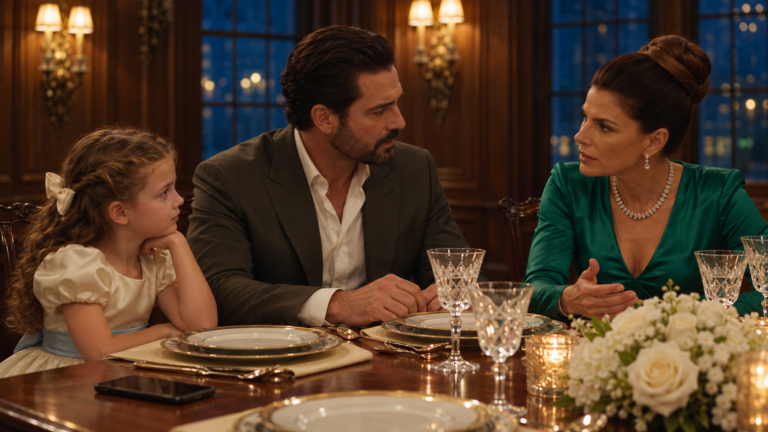
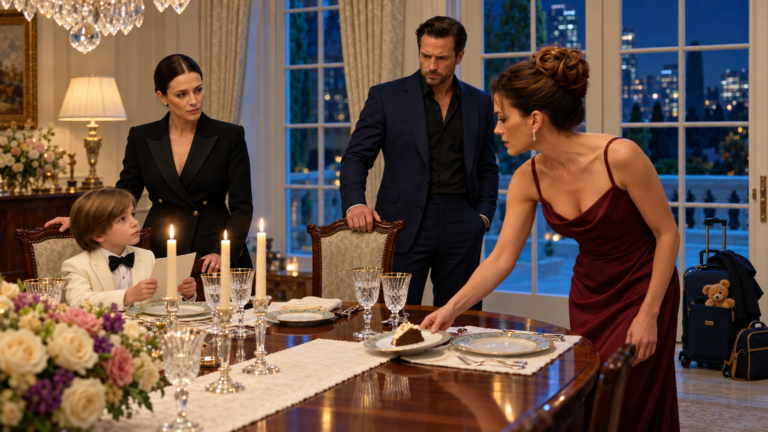
The first large meal afterward was at Marin’s home.
Her brother was visiting.
There were cousins.
Noise.
Too many shoes beside the door.
Evie was excited until one cousin laughed at the way she pronounced a word.
It was careless.
Not a campaign.
It still hurt.
She cried at the table.
I saw her hand begin to slide the plate away before anyone else could.
Marin gently stopped the plate.
“You can keep eating.”
The cousin looked embarrassed.
“I wasn’t being mean.”
“You hurt her feelings,” his father said. “You can apologize without deciding she shouldn’t have them.”
He did.
Evie nodded.
Then she asked to sit beside me.
We moved the places.
No ceremony.
No announcement that everyone needed to watch her recover.
After a while, she joined another conversation.
Later, she went outside with the same cousin.
They argued about a ball.
That was all.
The afternoon did not need to become proof that children were resilient.
It showed something simpler.
A mistake could be addressed.
A feeling could remain.
Lunch could continue.
On the way home, Evie said:
“Mom didn’t wait.”
“For what?”
“Till I stopped.”
I glanced at her in the mirror.
“No.”
She leaned back.
Then began telling me the rules of the ball game, most of which appeared to have been invented during the argument.
In November, Evie asked whether she could help choose dinner once a week.
Mrs. Patel welcomed the idea.
There were practical limits.
We could not live entirely on pancakes.
Vegetables still existed.
Other people had preferences too.
But the child could make choices without earning the right through perfect behavior.
Her first meal was tomato soup and cheese toast.
The toast burned on one side.