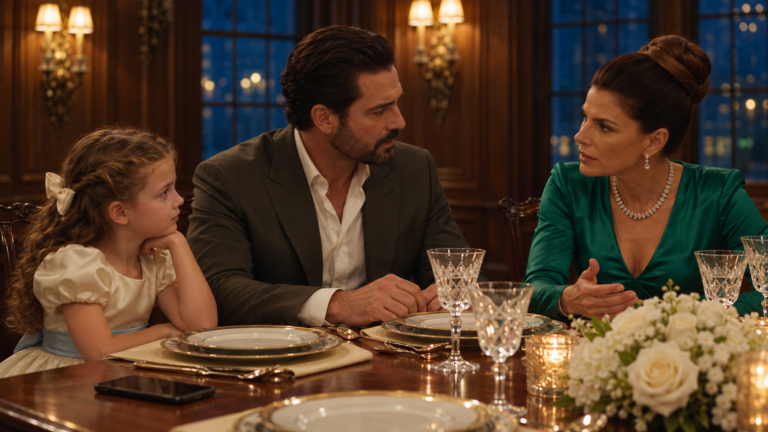
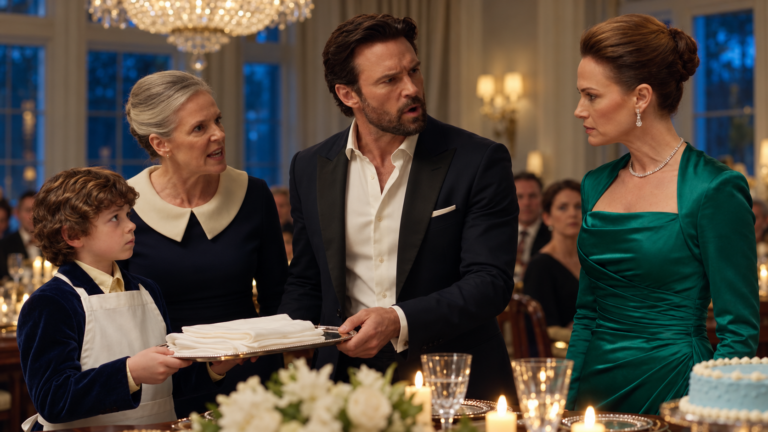
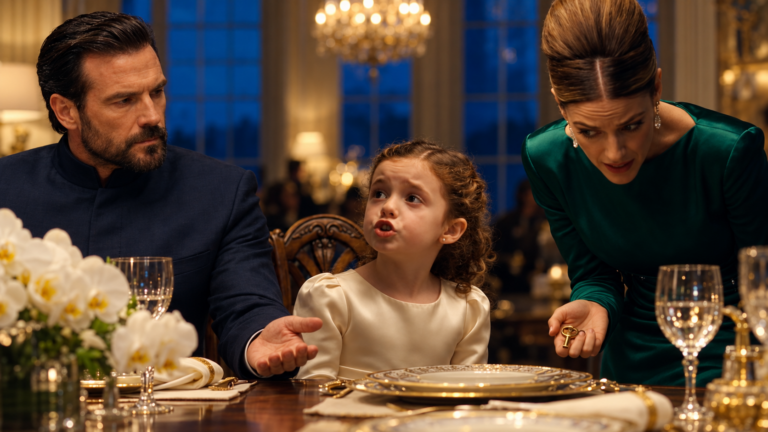
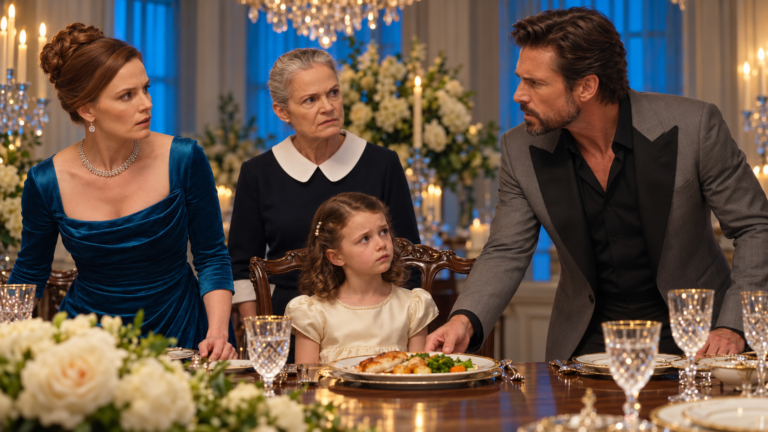
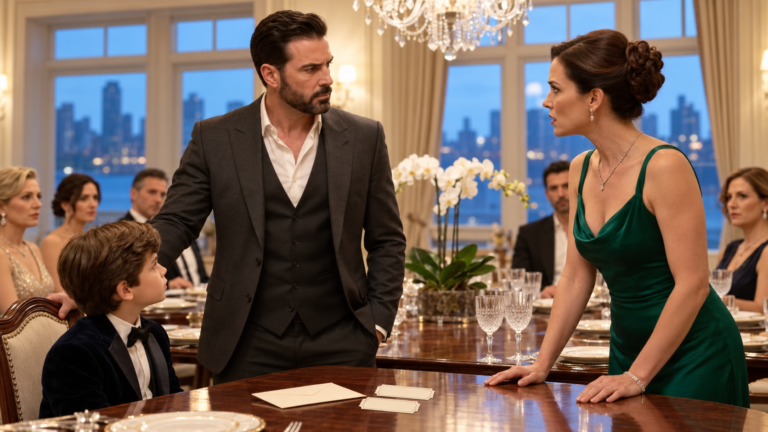
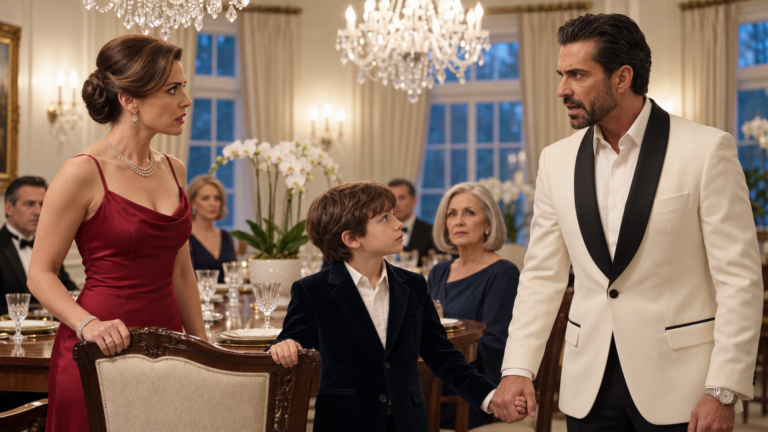
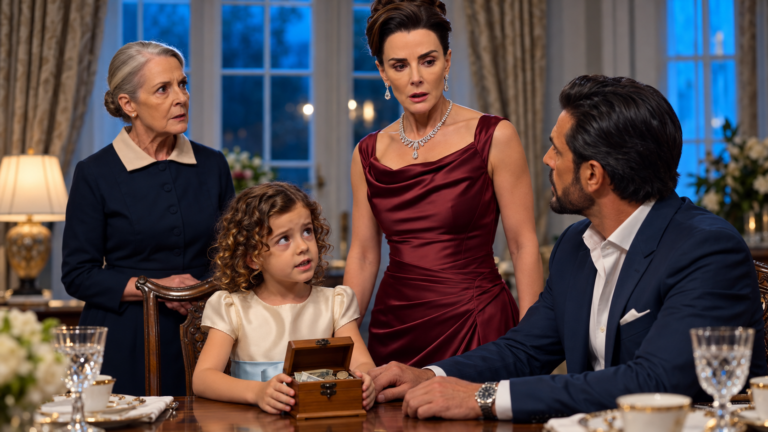
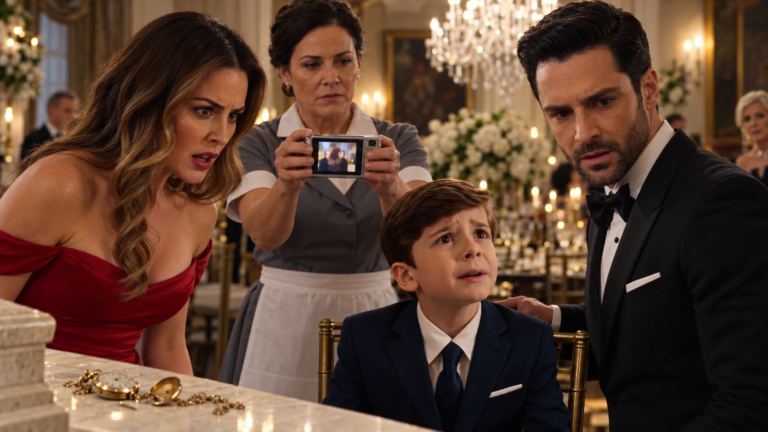
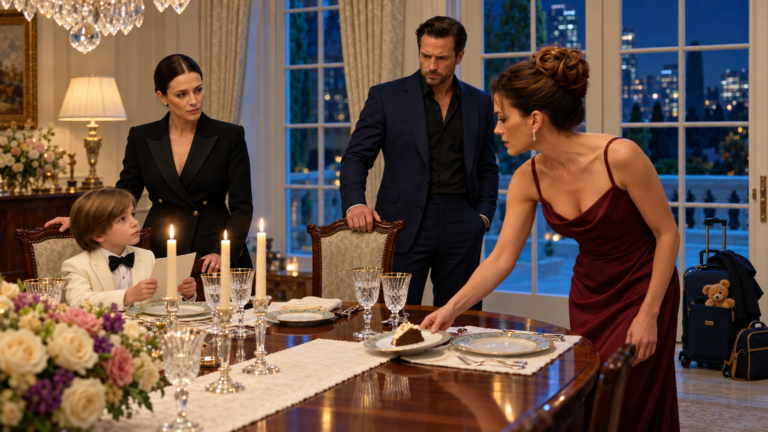
The man looked toward the window.
Then he admitted something.
“At dinner, before you came back, I told the boy we all had to look forward.”
Elias went still.
“What exactly did you say?”
“That his father deserved a happy life.”
The room became quiet.
His uncle shifted.
“I wasn’t telling him to forget her.”
“What do you think he heard?”
The older man did not answer.
Elias remembered Arthur offering his baby photograph.
The problem had not belonged to one person alone.
Felicity pushed.
Other adults supplied respectable language that made the pushing sound reasonable.
Looking forward.
Fresh starts.
Making room.
Being brave.
His uncle looked down.
“I should speak to him.”
“You can apologize for what you said. You can’t ask him to reassure you that it was harmless.”
The man nodded slowly.
That weekend, he came for lunch.
He told Arthur that remembering his mother did not prevent his father from being happy.
He said he should not have made it sound that way.
Arthur asked whether he could still be sad when other people were having fun.
The older man looked at Elias.
Then back at the boy.
“Yes,” he said. “I believe you can.”
It was not a perfect conversation.
It was an honest beginning.
Felicity sent a letter several weeks after leaving.
Elias read it privately before deciding whether to offer it to Arthur.
There were no accusations.
No requests for the boy to persuade his father.
She wrote that the photograph belonged to him and that turning it over was wrong.
She wrote that her feelings about joining the family were hers to discuss with adults.
She should not have made him responsible for them.
At the bottom, she said she was sorry.
Elias asked a family counselor how to handle it.
Arthur had begun seeing her after he became anxious about changes in the house. The meetings were not meant to teach him a correct feeling about Felicity. They gave him somewhere to ask questions without worrying about either parent’s disappointment.
With guidance, Elias told Arthur there was a letter.
“You can read it now, later, or not at all.”
“Do I have to write back?”
“No.”
Arthur chose later.
Three days afterward, he asked Clara to read it with him.
He listened twice.