“But the information you’ve provided has already helped investigators understand what happened.”
Evelyn remained quiet.
Then she asked:
“Do you think they’ll be held accountable?”
Camille considered the question.
“I think the evidence deserves a full examination. And I think the legal process needs to work.”
Evelyn nodded slowly.
She did not make an immediate decision about further cooperation.
But she agreed to remain in contact with investigators through her attorney.
For Camille, protecting witnesses had always been as important as prosecuting cases.
The garage incident had only reinforced that belief.
Chapter 14: The Evidence That Changed the Investigation
The independent inquiry continued for several months.
Investigators reviewed the deputies’ body-camera recordings, garage surveillance footage, access logs, communications, and the recovered documents.
The building’s security cameras captured the Lexus arriving.
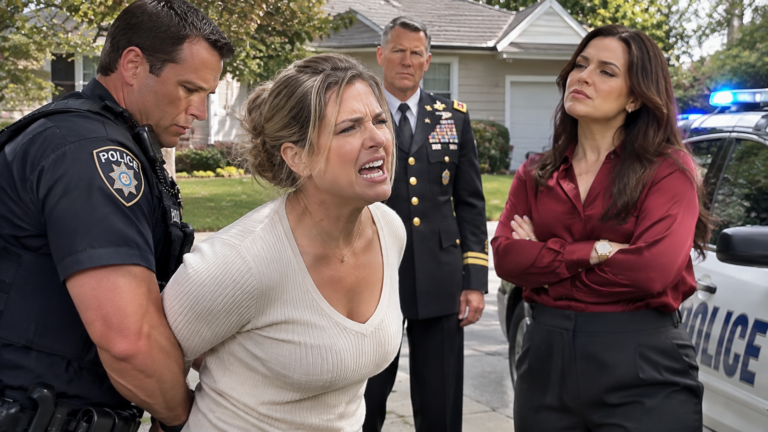
They showed the deputies approaching Camille.
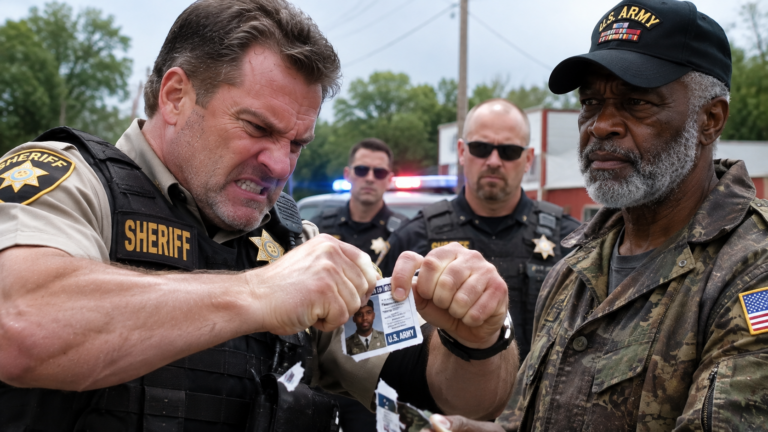
They recorded Voss opening her briefcase.
And they documented the arrest.
The recordings did not capture every word spoken.
But they established a clear sequence of events.
The investigators compared the footage with the deputies’ reports.
Several inconsistencies emerged.
Voss’s initial report described Camille as refusing to identify herself.
But the evidence showed that she had presented official credentials.
Mercer’s report described the removal of her phone as part of a security procedure.
But no corresponding authorization had been documented.
Luke’s camera had been redirected toward the wall during a significant portion of the encounter.
Investigators examined why.
Luke admitted that he had turned away after his supervisor became irritated by Camille’s questions.
The review also found that the deputies had not established a clear legal basis for the arrest.
Those findings were serious on their own.
But the larger investigation revealed something more troubling.
Communications suggested that the garage encounter was connected to an effort to interfere with the procurement fraud inquiry.
The two investigations were now linked.
And the evidence pointed toward people with influence far beyond the three deputies.
Chapter 15: The Scheme Behind the Invoices
The procurement investigation eventually identified a network of questionable transactions involving Harrison Infrastructure Group and several county officials.
The company had submitted invoices for emergency work that lacked adequate supporting records.
Certain towing charges appeared to have been approved without corresponding service documentation.
Investigators discovered possible conflicts of interest involving people responsible for approving payments.
Financial records also raised questions about whether money had been improperly directed through consulting agreements and subcontractor payments.
The evidence required careful legal examination.
Not every payment was improper.
Not every employee involved in the contracts had committed wrongdoing.
But investigators identified enough serious discrepancies to pursue criminal and administrative proceedings against specific individuals.
Major Dempsey’s role became a central issue.
The evidence suggested he had used his position to influence certain towing referrals and access information related to the investigation.
The garage incident added another layer.
Investigators examined whether the attempt to seize Camille’s witness statements was intended to identify cooperating individuals and obstruct the inquiry.
Voss’s communications with Dempsey became important.
So did Luke Brenner’s account.
And so did the records Camille had spent months organizing.