The story that began with a missing invoice had now become a major public corruption case.
Chapter 16: The Deputies Face the Evidence
Voss, Mercer, and Brenner were interviewed separately throughout the investigation.
Voss maintained that he had acted within his authority.
He claimed Camille’s presence in the garage raised legitimate security concerns.
Investigators asked what specific facts supported those concerns.
He referred to an internal notification.
They requested the notification.
No valid alert identifying Camille as a security threat was found.
They asked why her identification was not accepted.
He said he believed it might be fraudulent.
They asked whether he attempted to verify it.
He had not.
Then investigators reviewed the garage footage.
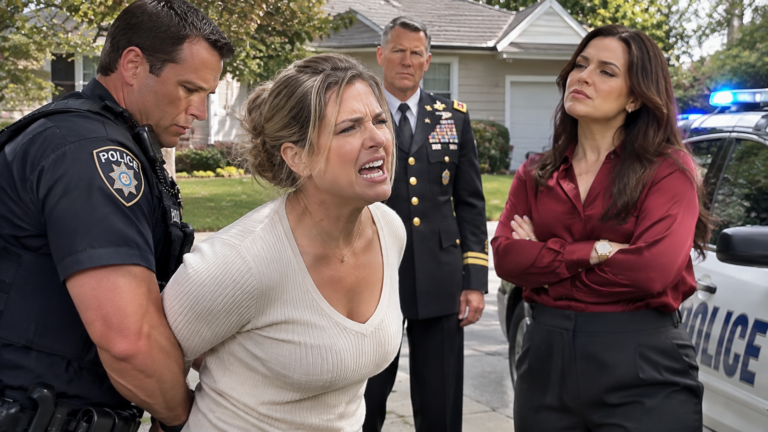
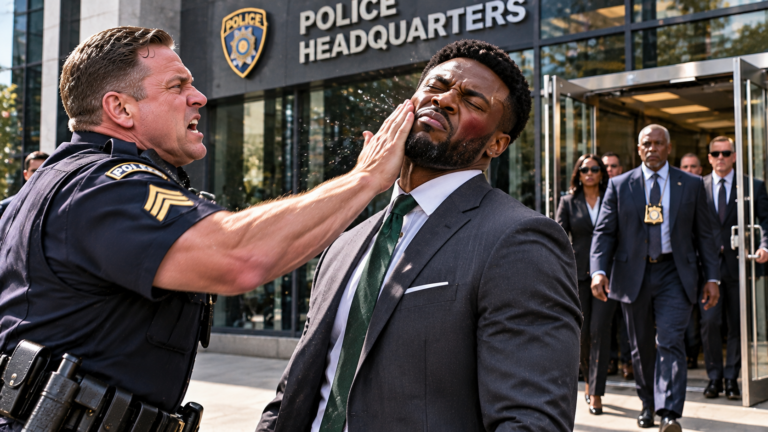
Voss watched himself place Camille in handcuffs.
He watched Mercer take her phone.
He saw the briefcase spill onto the concrete.
And he saw Luke turn his body camera toward the wall.
The investigator paused the recording.
“What was the legal basis for arresting Ms. Brooks?”
Voss remained silent.
His attorney requested time to review the evidence.
Mercer faced similar questions.
His actions were evaluated separately.
Luke admitted that he had participated in the encounter and failed to challenge instructions he knew were questionable.
His cooperation did not automatically remove responsibility.
But his statements helped investigators understand how the incident had been organized.
The review continued through the appropriate legal procedures.
And the three deputies who once laughed at Camille beside her Lexus were now facing questions they could not dismiss with a smile.
Chapter 17: The District Attorney Who Refused to Protect Her Own Office
Marion Price had served as district attorney for almost twenty years.
She understood the importance of prosecutorial independence.
She also understood that public confidence depended on a willingness to investigate misconduct even when it involved people close to powerful institutions.
Because Camille was a senior prosecutor in Marion’s office, the case created potential conflicts.
Marion requested that appropriate independent authorities handle decisions concerning criminal charges arising from the garage incident.
She also established procedures to protect the integrity of the procurement investigation.
The office reviewed access to sensitive witness materials.
Security protocols were strengthened.
And personnel were reminded that confidential case information could not be shared without authorization.
Marion addressed her staff.
“We cannot demand accountability from others while refusing to examine our own procedures.”
The room became quiet.
She continued.
“Our responsibility is to the facts and the law.”
Camille sat near the back.
Her wrists had healed.
The marks from the handcuffs were gone.
But she still remembered the pressure of the metal.
She remembered the laughter.
The documents on the wet concrete.
And the moment she realized the deputies were not merely questioning her.
They were trying to obtain information connected to a sensitive investigation.