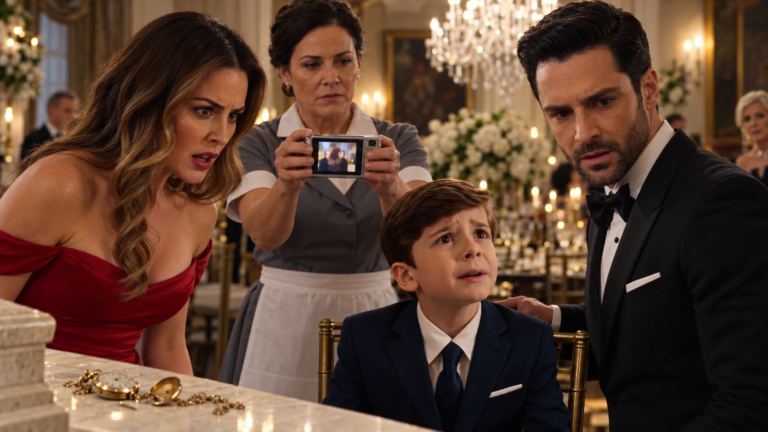
A teacher thanked him for coming.
Max looked for him during the applause, and he waved.
Darian asked whether it occurred to him that he was accepting a place intended for someone else.
Julian said Helena told him the ticket would otherwise be wasted.
“And when she called you his father?”
“I should have corrected her.”
“Why didn’t you?”
Julian looked down.
There was no noble answer.
He had liked how it felt.
That did not make him uniquely monstrous.
It made the choice more ordinary and, in some ways, harder to excuse.
A child had become part of an adult’s pleasant evening.
His actual wishes had been pushed aside because acknowledging them would have complicated the room.
Julian apologized.
He also offered to buy Max something.
Darian refused.
“Start with telling the truth.”
Julian agreed to write an apology that did not blame the child, the school, or a misunderstanding.
Whether Max wanted it would be decided with him.
The meeting ended without threats.
Darian did not need violence to make a boundary real.
He needed to keep it after the anger cooled.
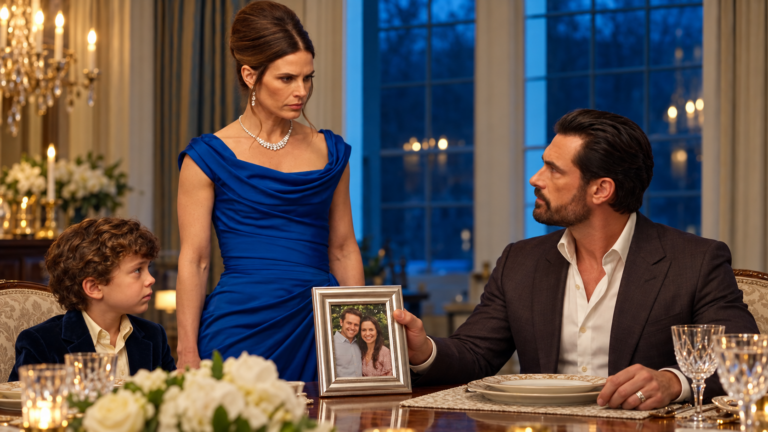
At home, Max became careful.
He asked before opening a cupboard he had always used.
He checked whether his father was working before bringing in a drawing.
He told me his school day was fine.
Everything was fine.
I knew that word.
It often meant a child had decided the details were too expensive.
I told Darian what I noticed.
He did not ask me to make Max talk.
He asked what might help.
We began with ordinary consistency.
Clear plans.
Answers given directly.
No claiming another adult had agreed without checking.
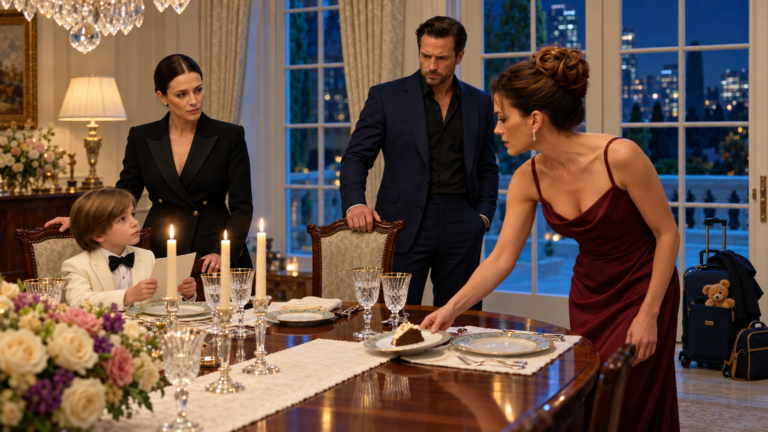
Helena would not be caring for Max alone while the situation was being resolved.
He was told that in simple words.
He asked whether she was angry.
Darian said she might be.
Then he added:
“Her feelings are not something you need to manage.”
Max watched him.
“She said you were upset because of me.”
“When?”
“After the play.”
“What did she say?”
“That I made a nice evening difficult by looking for you.”