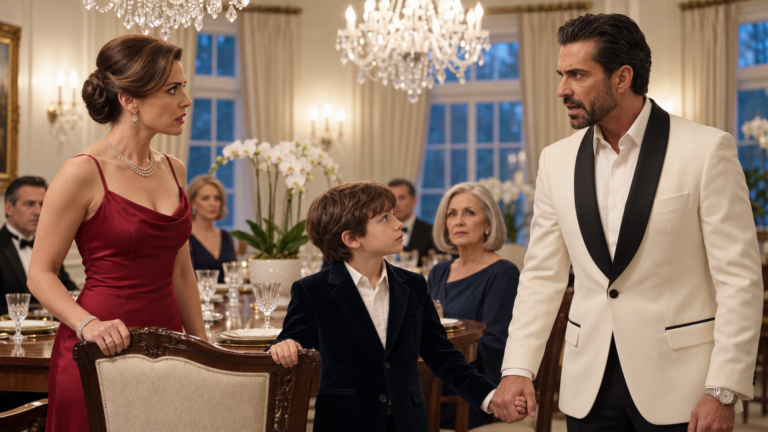
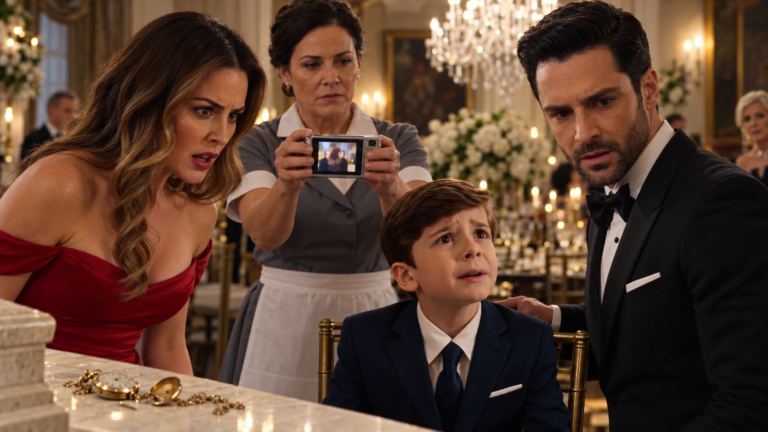
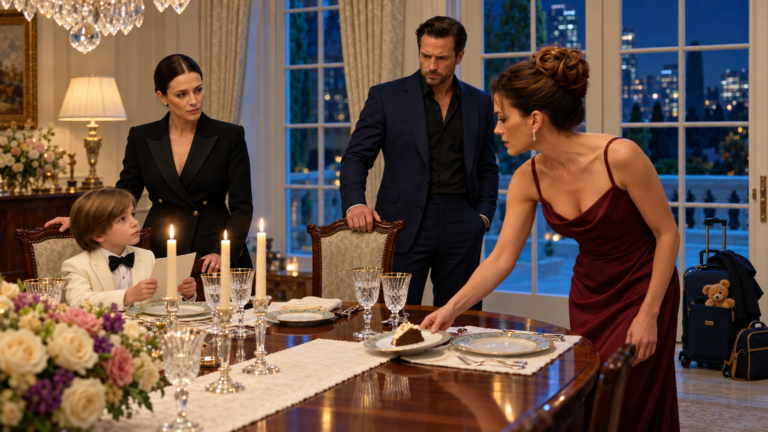
“You know which school?”
His father’s face changed.
He smiled gently.
“I do.”
The boy nodded.
Then climbed inside.
I understood the question better than I wanted to.
A child who had been given false explanations about one missed event had begun checking the basic facts of his father’s knowledge.
Where the school was.
Whether he knew the teacher.
Whether he had ever seen the costume.
Trust had narrowed into small questions with yes or no answers.
We needed to answer them patiently.
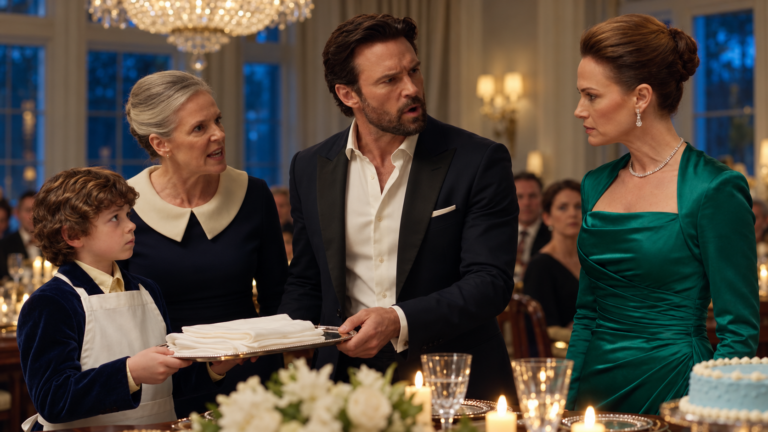
Darian spoke to Helena while Max was out.
He told me afterward because parts of the conversation affected the child’s care.
She admitted she had not delivered the invitation.
She said Max was anxious about being watched.
Darian asked whether she had spoken to the teacher.
No.
The school counselor?
No.
Max himself?
She said children didn’t always know what they needed.
Then he asked about the costume.
Helena said she was preparing Max for disappointment.
“By telling him I laughed at him?”
She said Darian was repeating the worst possible version.
He asked for the better one.
She said he had made remarks before about school costumes being silly.
He remembered joking about a paper hat at a different event.
Not about Max.
Not about this performance.
Not permission to invent ridicule.
“Did you tell him I had seen it?”
She admitted she had.
Darian asked why.
For a while, she spoke about managing expectations.
Then the explanation changed.
She said his presence made people uncomfortable.
That was the first answer connected to something real enough to deserve examination.
Darian’s life did attract attention.
There were parents who knew his reputation.
People who disliked the cars.
The men who sometimes waited nearby.
He did not deny it.
But none of that explained why his son had been told he was unwanted.
I had spent years working in homes where every practical issue became more complicated when someone powerful was involved.
A school performance should have been simple.