“She might be disappointed.”
The boy’s shoulders lifted.
“But that is not your responsibility,” his father added.
Max nodded.
The letter joined Julian’s in the drawer.
Not destroyed.
Not treasured.
Kept.
A child did not have to know immediately what every object should mean.
That autumn, he opened the drawer once to find a ruler.
The letters remained beneath a notebook.
He closed it and returned to his homework.
I found that ordinary indifference hopeful.
Their importance was no longer expanding to fill every day.
There was an awkward moment at a family lunch.
A cousin asked Max whether he would be performing again.
The boy shrugged.
Another adult joked:
“Your dad will need front-row seats this time.”
Max went quiet.
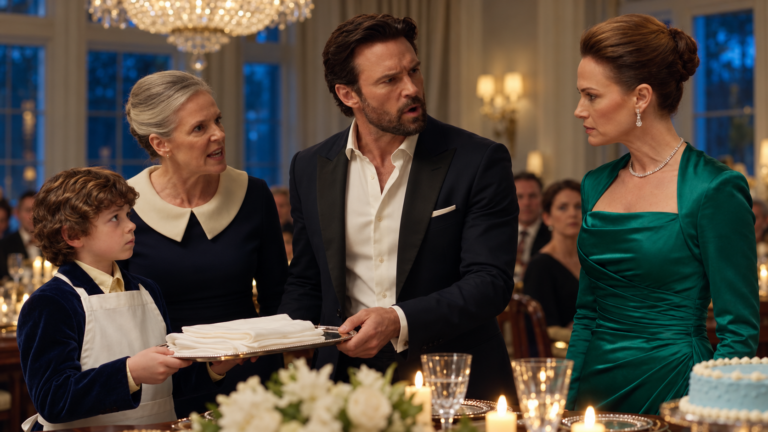
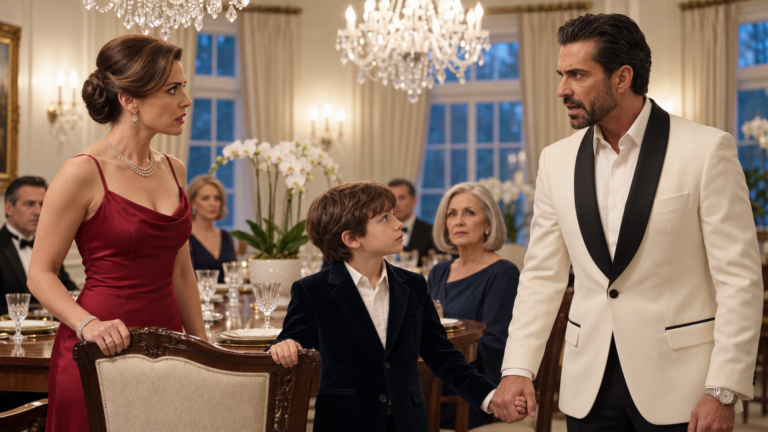
Darian put down his fork.
“Please don’t make that a joke.”
The cousin looked embarrassed.
“I didn’t mean—”
“I know. But we won’t joke about it.”
There was no lecture.
No public account of what Max had suffered.
The conversation moved on.
Later, the cousin apologized to the child.
Max nodded.
Then asked him about a football match.
The relationship continued.
That was useful too.
Not every mistake meant somebody had to disappear.
Not every apology restored everything.
Adults needed to judge the difference and behave accordingly.
Max watched those corrections.
He learned that a boundary could be stated without the room becoming dangerous.
He also learned his father could defend something important without frightening everyone into silence.
That part mattered.
Darian had spent years mistaking silence for respect.
His son needed something better.
A room where a wrong word could be corrected.
Where a child could remain seated.
Where the next conversation was allowed to happen.
In September, Max joined the stage crew.
The decision was his.
He did not say acting was over.