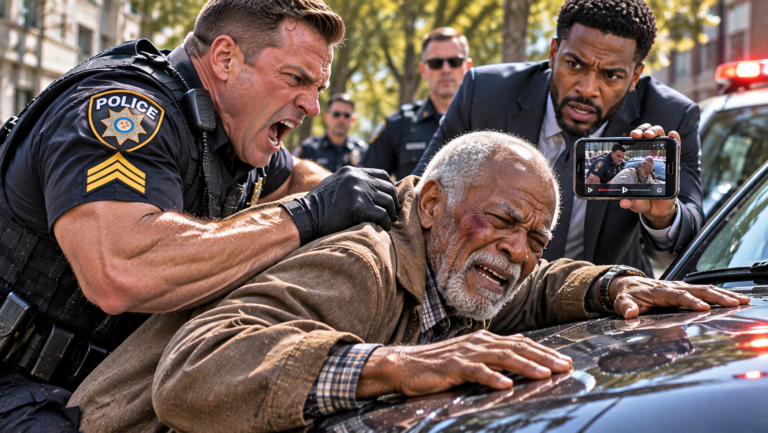
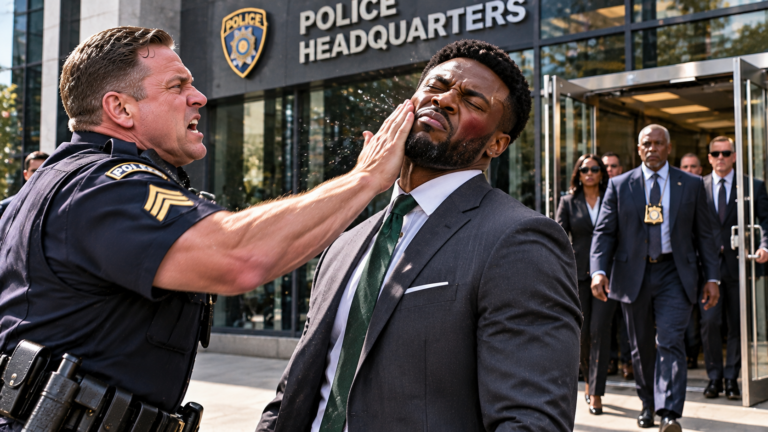
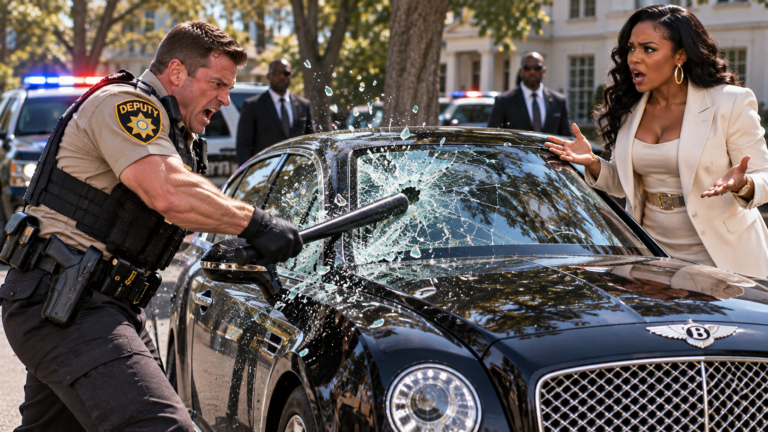
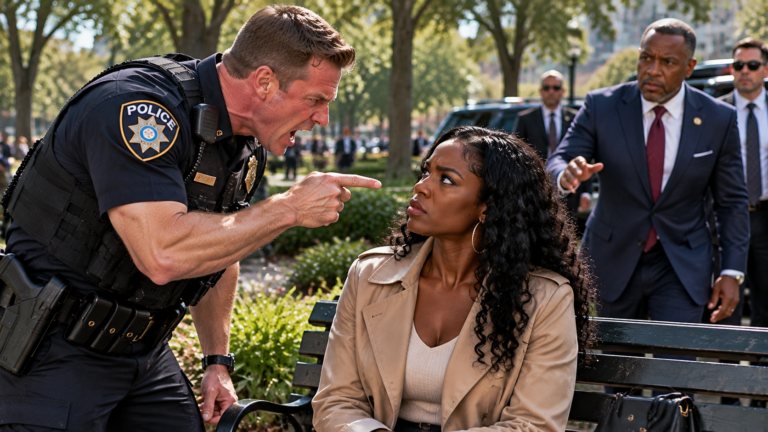
No authorized arrest had been documented.
And the prepared statement on the table contained admissions that Arvand said were false.
Then they asked about the Darius Bell recording.
Riker became visibly uncomfortable.
He acknowledged that he had worked on the case.
He said he remembered Captain Vale.
But he claimed he had no knowledge of suppressed evidence.
The investigators played the old audio.
Riker stared at the table.
He heard his younger voice asking whether the alibi information needed to be preserved.
Then Vale ordering him to stop asking questions.
For several moments, Riker said nothing.
Finally, he spoke.
“I was twenty-seven.”
The investigator waited.
Riker continued.
“I was new. Vale ran everything.”
“Did you know information supporting Darius Bell’s alibi existed?”
Riker looked down.
“Yes.”
“Did you disclose that information through the proper procedures?”
He remained silent.
His attorney requested a break.
The interview ended without a full explanation.
But the evidence had established that Riker’s role in the old investigation required serious examination.
And the attempted interrogation of Arvand had created an entirely new set of allegations.
Chapter 15: The Captain Who Built His Reputation on Confessions
Raymond Vale had retired from the department six years earlier.
He was sixty-eight and lived in a comfortable house near the coast.
During his career, he had been praised for securing confessions in difficult cases.
He received commendations.
Appeared in local news stories.
And trained younger investigators.
But the reopened Darius Bell case raised troubling questions about how some of those confessions had been obtained.
Independent reviewers examined old interview records.
Several cases contained incomplete recordings.
Some reports described lengthy interrogations without corresponding documentation.
Others included statements that defendants later claimed were inaccurate.
The reviewers did not assume every confession was false.
But they identified enough concerns to warrant further investigation.
Vale denied wrongdoing.
He argued that investigative practices had changed over time and that his decisions had been lawful.
The investigators examined each case separately.
They also reviewed whether exculpatory information had been disclosed appropriately.
The evidence from the Darius Bell investigation became particularly important.
The preserved recording suggested that officers had been aware of information supporting Darius’s alibi.
Yet the official case file did not clearly reflect how that information had been handled.
The review expanded to include potential misconduct by Vale and others involved in the original investigation.
The case was no longer simply about Riker threatening a man in a forgotten room.
It had become an inquiry into whether an innocent person had lost fifteen years because investigators preferred a confession to contradictory evidence.
Chapter 16: The Man Who Came Home Fifteen Years Late
Darius Bell had been free for several months when Arvand told him about the recovered recording.