Riker had more years of experience.
He was older.
And he had told her to return upstairs.
But Jasmine knew that professional responsibility sometimes required questioning another officer’s conduct.
During an interview, she was asked why she contacted dispatch.
She answered plainly.
“Because the situation didn’t match what our procedures required.”
The investigator nodded.
“Did you believe Officer Riker was dangerous?”
Jasmine considered the question.
“I believed someone might need help.”
Her statement was documented.
The department later reviewed its procedures for reporting unauthorized detentions.
Jasmine’s actions were recognized as appropriate.
But she did not consider herself a hero.
When Arvand thanked her during a later meeting, she looked uncomfortable.
“I just did what I was supposed to do.”
Arvand smiled faintly.
“That’s exactly why it mattered.”
Chapter 18: The Consequences of the Truth
The investigations continued for months.
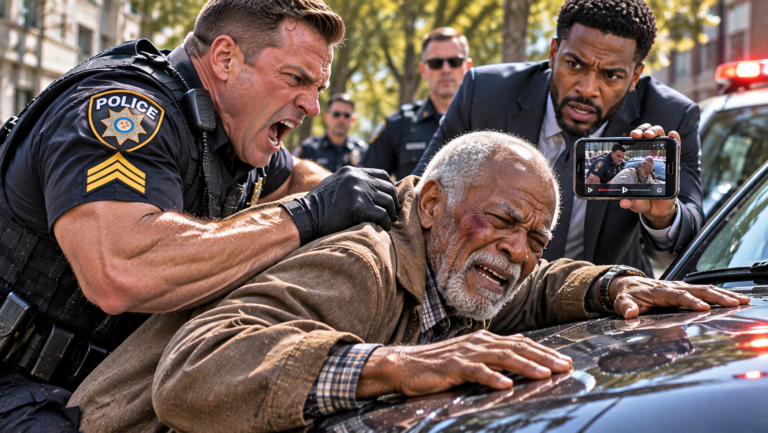
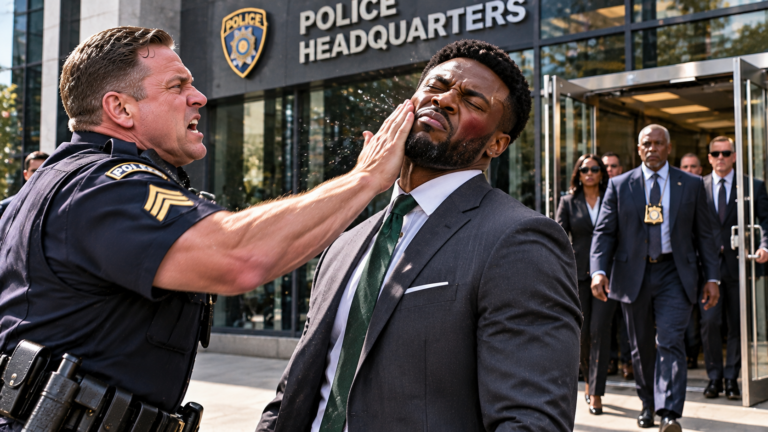
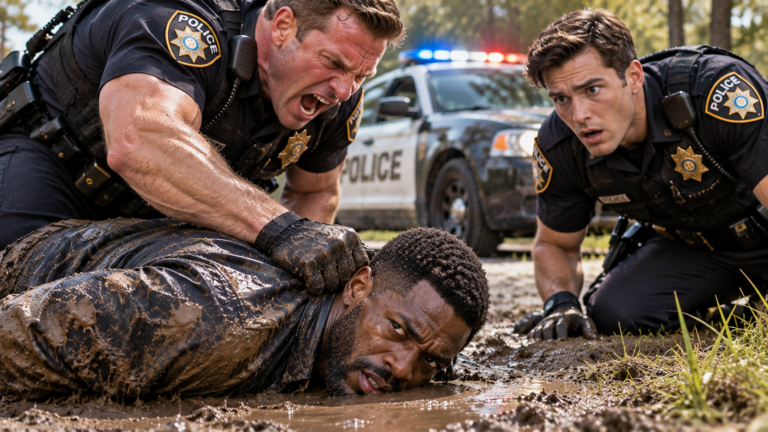
Independent prosecutors reviewed evidence concerning Riker’s conduct in the annex, including the undocumented detention and the attempt to obtain a false statement.
Administrative findings established serious violations of department policy.
Riker was dismissed following the disciplinary process.
Potential criminal violations were pursued through the appropriate legal proceedings.
The investigation into the original Darius Bell case also continued.
Authorities examined whether evidence had been improperly withheld and whether official records had been falsified.
The findings prompted a broader review of cases connected to Captain Vale’s investigative unit.
Some convictions remained unaffected.
Others required additional examination.
In several cases, courts ordered new proceedings after previously undisclosed information was identified.
Darius’s exoneration remained intact.
His legal team pursued available remedies for the wrongful conviction.
But he understood that no financial settlement could restore the years he had lost.
He would never be nineteen again.
He could not return to the college classes he missed.
He could not recover the time his mother spent worrying about him.
And he could not erase the fear he felt during the interrogation that changed his life.
Yet the investigation gave him something important.
An official acknowledgment that the evidence against him had been deeply flawed.
And a clearer understanding of how those failures occurred.
Chapter 19: The Room They Finally Closed
The old police annex was scheduled for renovation.
After the investigation, the department reviewed its use of outdated interview spaces.
The basement interrogation room had been operating outside current standards.
Its camera system was inactive.
Its access controls were inadequate.
And its use had not been consistently documented.
The department closed the room.
The steel door was removed during renovation.
The old camera was taken down.
And the damaged concrete walls were eventually covered with fresh paint.