He looked toward the doorway.
“But I want to.”
The two men embraced.
And for a moment, the years between them seemed less important than the fact that they were finally standing together outside a courtroom or prison visiting room.
Chapter 21: No Cameras Didn’t Mean No Truth
That evening, Arvand returned home.
He placed his keys on the kitchen counter and hung his jacket beside the door.
The house was quiet.
A small lamp illuminated the living room.
On his desk lay a photograph of Darius at nineteen.
He was wearing a graduation gown.
Smiling.
Holding a certificate from his high school.
Arvand picked it up.
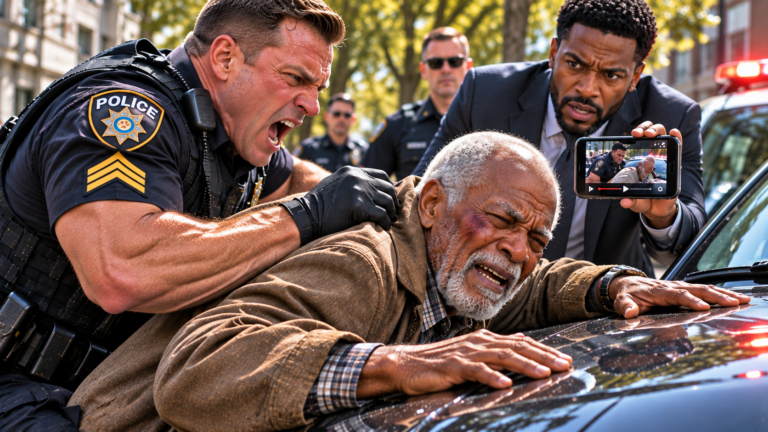
He thought about the young man who had been taken into custody only months after the picture was taken.
Then he remembered the interrogation room.
The harsh light.
The rusted steel door.
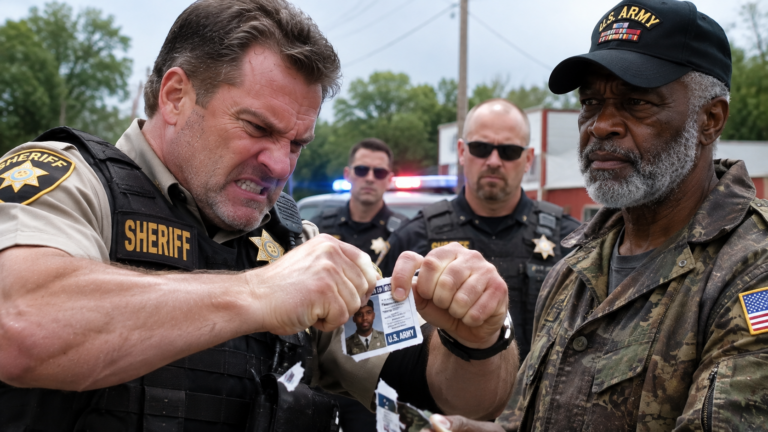
The blue gloves.
And Officer Tommy Riker standing across the table.
“No cameras. No witnesses.”
The words had been intended to make Arvand feel powerless.
Riker believed that without a recording, he could control what everyone would believe.
But Arvand knew something the officer had forgotten.
Evidence existed in many forms.
There were documents.
Access records.
Witness accounts.
Communications.
Physical conditions.
And the decisions people made before and after an encounter.
A camera could help establish the truth.
But the absence of a camera did not automatically make the truth disappear.
Arvand thought about Helen Sato.
The frightened clerk who finally came forward.
Jasmine Reed.
The young officer who refused to ignore an undocumented detention.
Nadine Harper.
The attorney who noticed when he failed to call.
And Darius.
The young man whose determination to insist on his innocence had survived fifteen years of imprisonment.
No single person had solved everything.
But each had contributed something important.
And together, those actions made it possible to examine what powerful people had tried to keep hidden.
Arvand returned the photograph to his desk.
Then he looked toward the window.
He had spent fifteen years asking whether the justice system could correct a terrible mistake.
Now he understood that correction was possible.
But it required evidence.
Patience.
Independence.