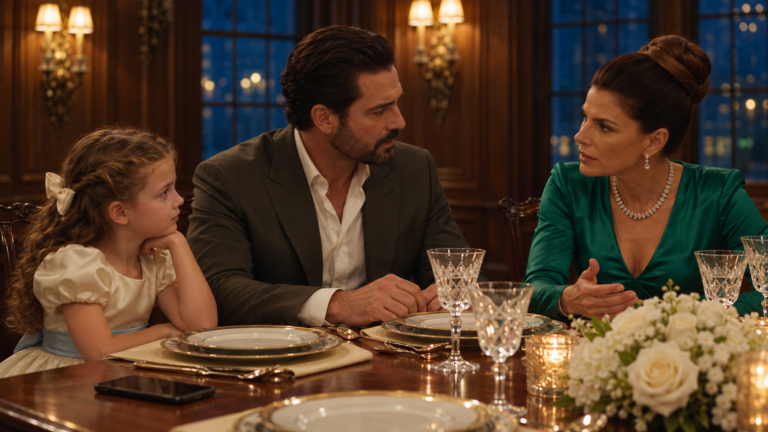
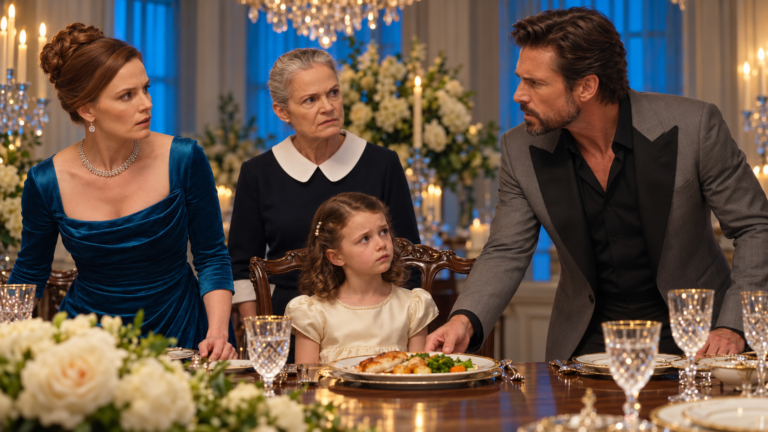
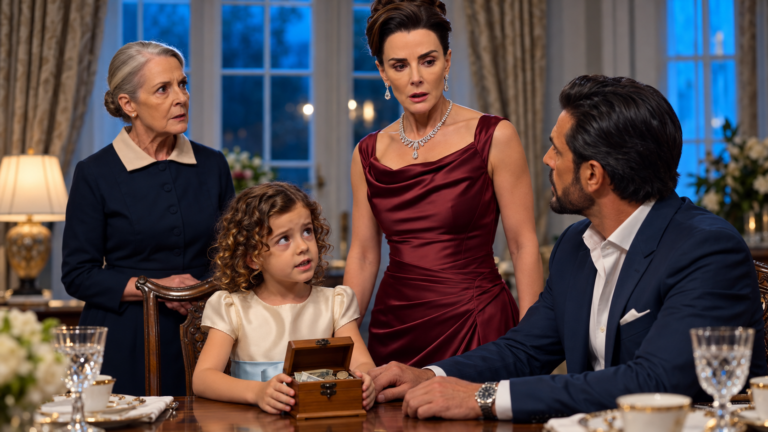
He was being kind.
Charles understood that.
He didn’t reply as though Oliver had accepted responsibility.
He told him a story about his father missing a train despite owning a very good watch.
Oliver smiled.
For several minutes, the broken object stopped being evidence and became a memory someone was allowed to share.
At school, the story emerged in pieces.
Oliver told his teacher there had been trouble at dinner.
She asked whether he needed to talk.
He said not then.
She respected that and contacted Lena and me appropriately.
We explained the situation.
The teacher said he sometimes accepted responsibility for group mistakes before anyone asked.
She had thought he was trying to help.
Perhaps he was.
He had also learned that saying sorry could shorten a difficult conversation.
We arranged support with the school counselor.
We didn’t tell him he needed to become more confident.
He had spoken clearly at the dinner.
He had told the truth.
The problem was not that he failed to advocate for himself.
The adults had failed to respond properly.
I made sure he heard that distinction.
One evening, he asked whether he should have shouted.
“No.”
“Patrick was louder.”
“I know.”
“So maybe—”
“You didn’t need a louder voice to deserve an answer.”
He looked at me for a long time.
Then he nodded.
Later, I overheard him tell a classmate on a video call:
“I said it the first time.”
There was pride in his voice.
Not because he had won.
Because he had begun separating his own honesty from another person’s willingness to recognize it.
That would take time.
We could at least stop making the task harder.
Patrick’s hotel appointment did not proceed.
He accused me of punishing an accident.
I invited him to explain his conduct to the people reviewing the appointment.
Not to me alone.
He declined.
That choice did not prove everything about his character.
It told us enough about whether he could accept scrutiny.
We also reviewed earlier work involving him.
The purpose was not revenge.
He had been allowed influence through family relationships, and the dinner showed how easily those relationships could distort accountability.