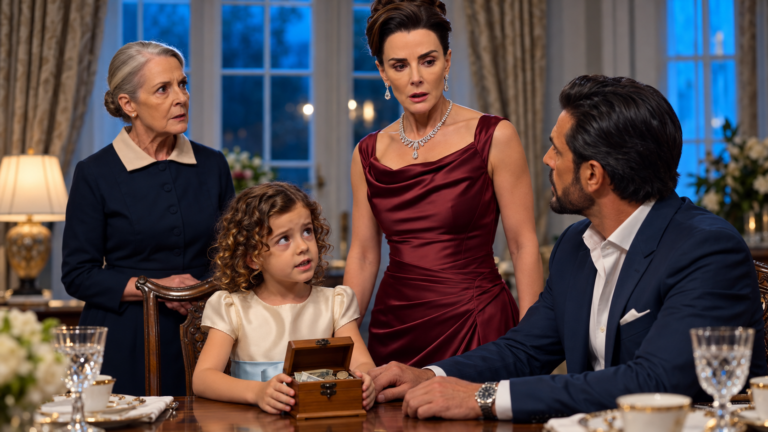
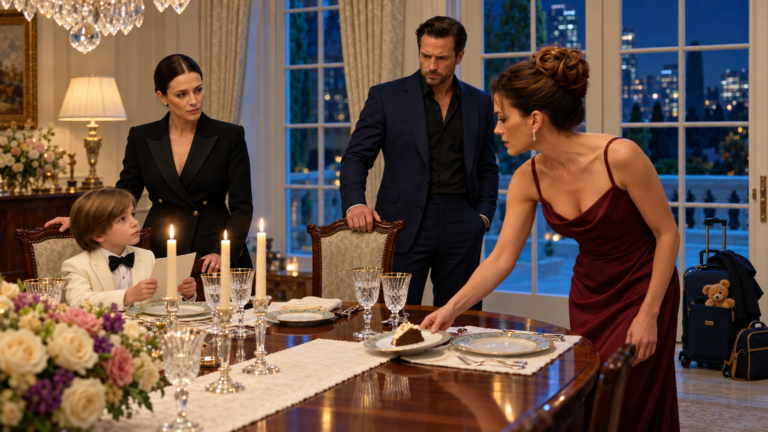
Oliver nodded.
Then he asked whether Charles wanted help choosing a box to keep it in.
Charles smiled.
“I’d like your opinion.”
They looked through several options.
No money changed hands.
No suggestion that the child should pay for someone else’s mistake.
He was simply being included in a decision he found interesting.
After Charles left, Oliver asked whether something could be repaired and still matter.
“Yes.”
“Even with the mark?”
“Yes.”
He thought.
Then he said:
“Patrick should have told him.”
“He should.”
“Then it would just be a sad watch.”
I looked at him.
A sad watch.
Not a frightened child.
Not a public accusation.
Not a household wondering how many other stories had been made convenient.
“Yes,” I said.
“It would have been.”
Oliver went upstairs.
I remained in the hall longer than necessary.
Nine-year-olds sometimes reduce an adult failure to its simplest shape.
It is uncomfortable when they are right.
Bianca asked to apologize.
I did not arrange a meeting immediately.
Lena and I discussed it, and we sought guidance about giving Oliver a real choice without asking him to manage the adults.
He wanted to know whether Bianca would say he misunderstood.
I told him that would not be allowed to become another argument about his experience.
He asked whether he had to accept a hug.
No.
Whether he could leave.
Yes.
Whether he had to attend at all.
No.
He chose a letter first.
Bianca’s first version said she regretted the upset caused by the evening.
I returned it.
I asked her to name the accusation and the fact that she knew Patrick had handled the watch.
She said I was demanding a confession.
I said I was deciding what would be placed before my son.
The next letter was clearer.
She had blamed him unfairly.
She had known more than she admitted.
He had not broken the watch.