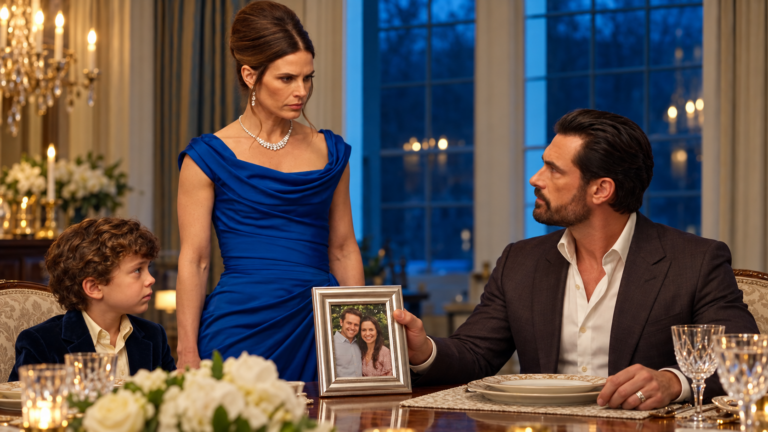
So had the mark.
Charles put it away.
Then he asked whether Oliver wanted to see the model railway in his study.
The boy looked at me.
I nodded.
He followed.
Later, as we drove home, he said:
“I might hold it another time.”
“If you want.”
“Not because I have to show I’m careful.”
“No.”
He smiled.
“Just because it’s interesting.”
“Yes.”
That was what curiosity should feel like.
An invitation.
Not an examination.
In September, the school asked parents to contribute photographs for a project about family traditions.
Oliver chose one from the dinner.
Not the broken-watch sequence.
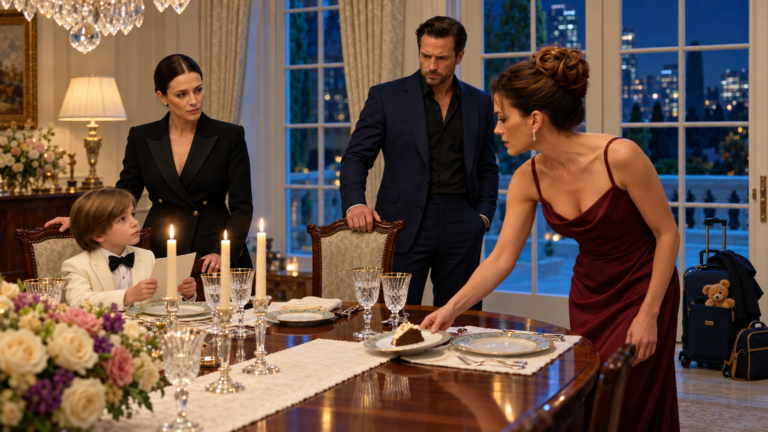
A photograph of him arranging the name cards with Maria.
He stood on one side of the table, concentrating.
She stood on the other, holding a ruler they had used to space the settings.
I asked why he chose it.
“Because we always do that.”
I looked at the image.
The afternoon before everything went wrong had still contained something good.
He was allowed to keep it.
He wrote a paragraph about how Maria taught him to check spellings.
How people liked finding their names.
How a table felt different when someone expected you.
His teacher sent me a copy with his permission.
I read it twice.
Then I asked whether he wanted help preparing for the presentation.
He shook his head.
“I know what happened.”
I nodded.
Of course he did.
At the presentation, he told the story.
A child asked whether Maria was part of his family.
Oliver considered.
“She works with us,” he said. “And she matters.”
It was not a perfect definition.
It was his.
I liked it better than many things adults had said about belonging.
A year after the watch broke, our business anniversary arrived again.
I did not cancel every celebration as though refusing a dinner could undo the previous one.
We held a staff event at the hotel.