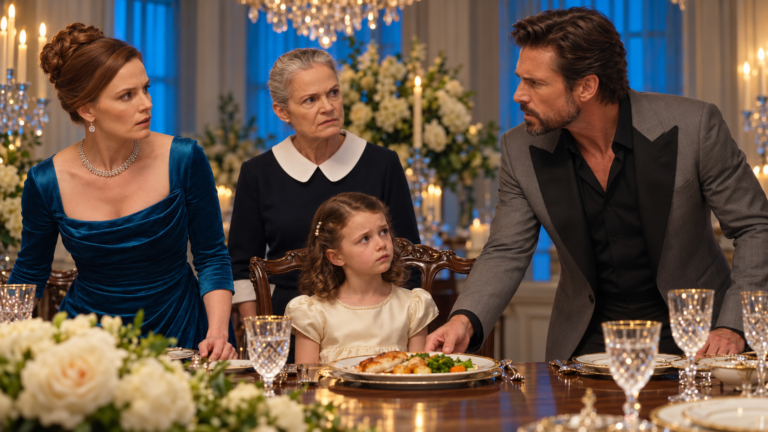
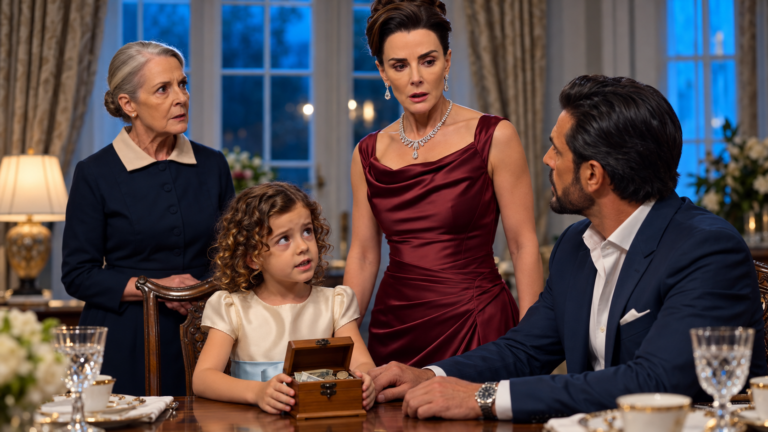
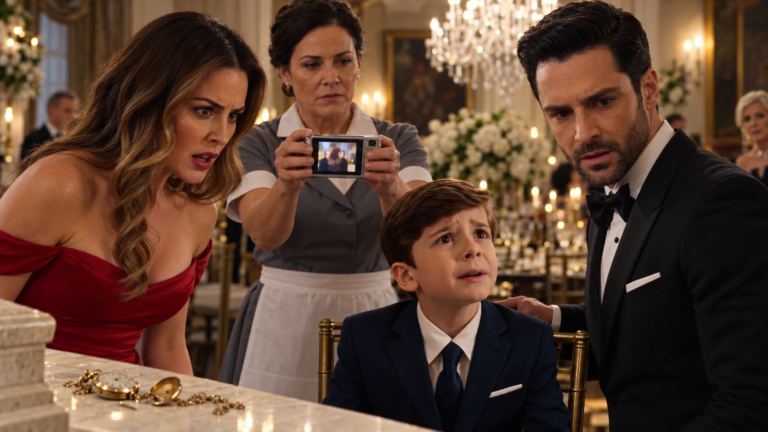
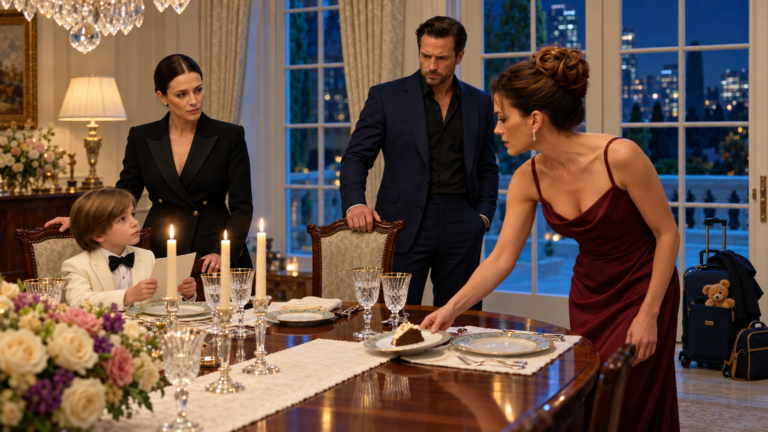
The explanations were practical.
He would be more comfortable near the kitchen.
There would be more room.
The adults needed to speak.
Mrs. Bell objected when Theo looked unhappy.
Camilla said I had agreed.
I had not.
But I had also given her broad authority over household arrangements without asking where she believed that authority ended.
“What did Theo say?”
The housekeeper looked down.
“He asked whether he should bring his own chair.”
I closed my eyes.
“When?”
“The second time.”
“Why didn’t you tell me?”
She was quiet.
Then she said:
“I asked if you had a moment. You told me Camilla was handling the seating.”
I remembered.
A hurried afternoon.
A call waiting.
A household detail I considered too small to interrupt business.
Now I looked toward the dining room.
A chair could be furniture.
It could also be the only way a child knew how to ask whether someone still wanted him nearby.
My mother had noticed more than she said.
That was a difficult conversation.
I loved her.
I trusted her.
I also needed to understand why the dinner had been allowed to happen.
We sat in the garden while Theo attended a school activity.
Vivian folded her hands in her lap.
“I heard one comment at a lunch.”
“What comment?”
“That Theo needed to understand the family had a history before he arrived.”
My jaw tightened.
“What did you say?”
“That every family has a history before every child arrives.”
“What happened?”
“She smiled. Said she meant the photographs on the wall.”
My mother looked toward the house.
“I wanted to believe that.”
“Why?”
She answered honestly.
“Because you were happy.”
I looked at her.
She continued.
“And because I thought if I questioned her too soon, you might think I had decided against her.”
I sat back.