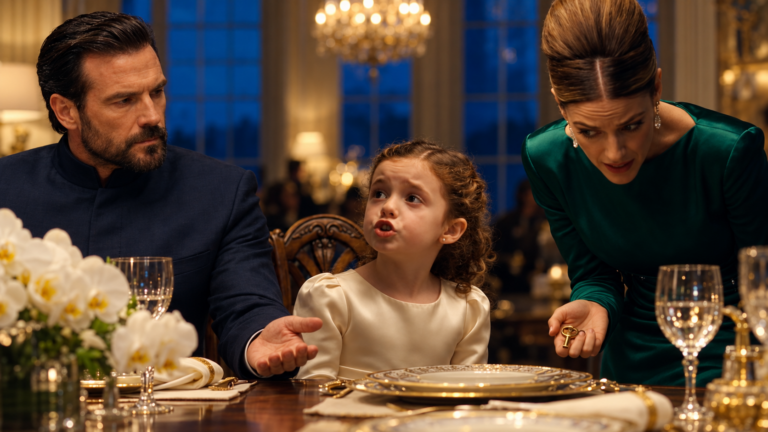
The napkin ring remained in his hand.
My mother reached across and placed her own beside his.
“We’ve both polished ours,” she said. “We should probably use them.”
Theo gave her a small, uncertain smile.
Camilla remained standing.
“This cannot become an argument in front of everyone.”
I looked at her.
“You made an announcement in front of everyone.”
“I was organizing dinner.”
“You removed my son.”
“I moved a chair.”
There were many things I could have said.
Most would have made the room louder without making it safer.
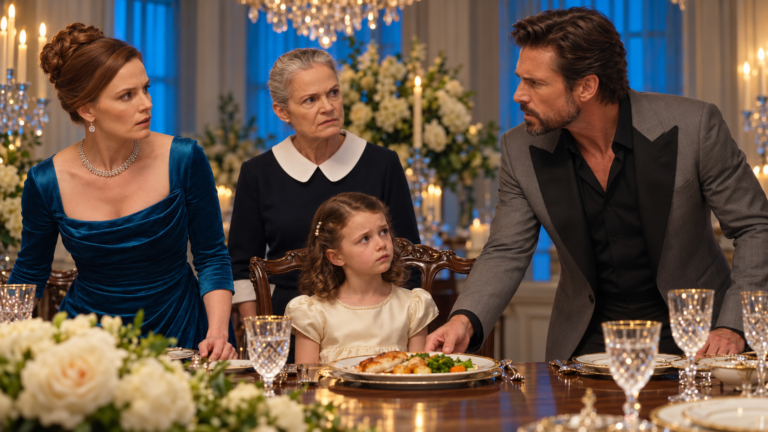
I sat beside Theo.
“We’re eating first.”
Camilla stared.
“What?”
“He’s hungry. So am I. Any conversation you want to have with me can wait until he is comfortable.”
My mother looked toward the doorway.
“Would you ask the kitchen to begin, please?”
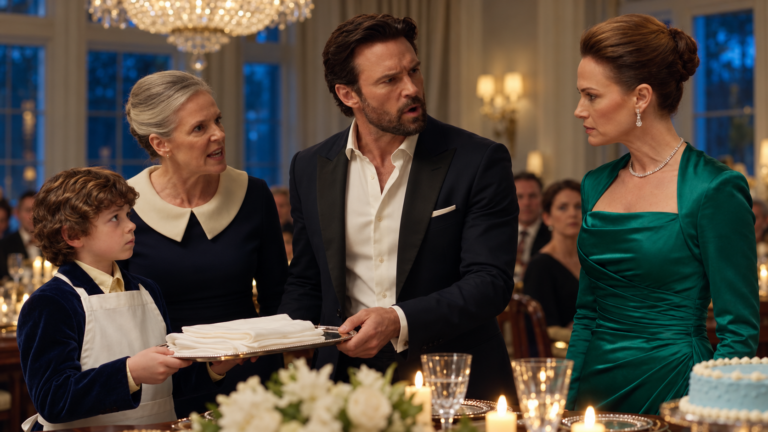
Mrs. Bell, our housekeeper, nodded and disappeared into the hall.
The guests shifted.
My cousin started a conversation about the rain.
It was a clumsy attempt.
I appreciated it.
Theo set the napkin ring beside his plate.
Then looked toward Camilla.
She was still watching us.
I turned to her.
“If you can’t join dinner respectfully, you can leave the room.”
Her face changed.
She had heard me use that tone with people who ignored clear limits.
Perhaps she had never imagined hearing it directed at her.
She pulled out her chair.
Sat down.
Nobody mistook that for agreement.
But my son had food coming.
His name was where it belonged.
For the next few minutes, I gave him my attention instead of demanding that he watch me punish someone.
Theo ate carefully.
Too carefully.
He kept his elbows close and moved his water glass farther from the edge.
I knew those habits.
They appeared when he thought something important might depend on being easy to accommodate.
At six, he had arrived in my home carrying a backpack with a broken zipper.
He liked his clothes folded inside it even after we gave him drawers.
He put away toys before he finished playing.
If food remained on his plate, he asked whether he could save it.