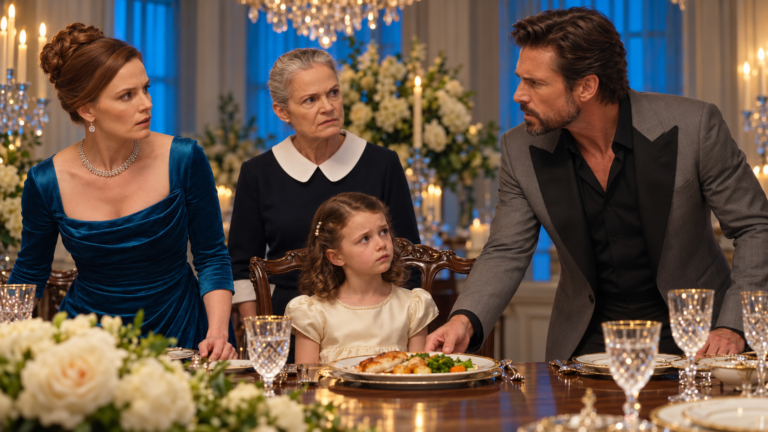
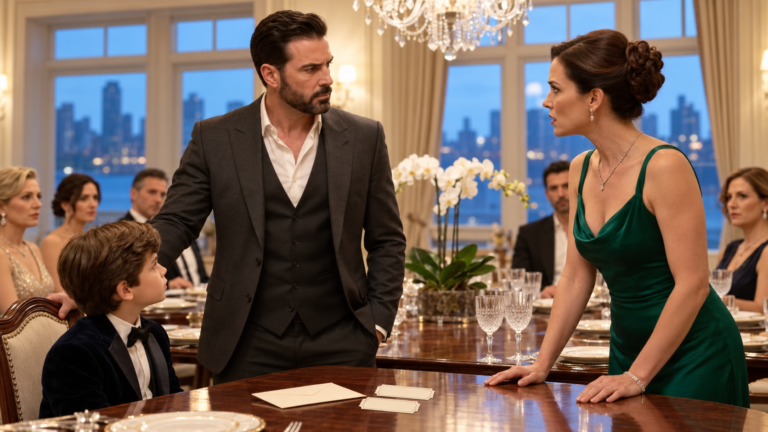
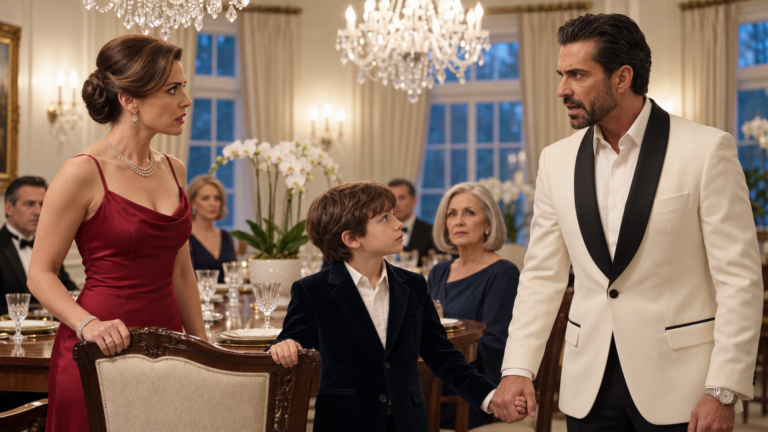
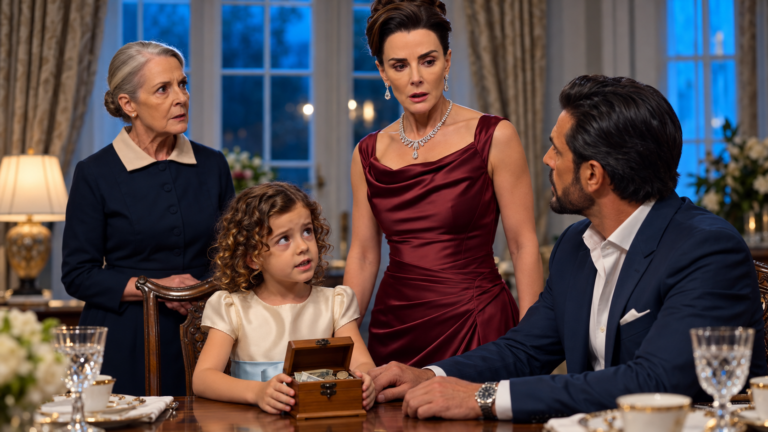
Several weeks later, he asked to go back.
This time Vincent took him.
I heard about it afterward.
Oliver chose a pastry.
He pointed first.
Then, when the server smiled and reached for it, he added:
“That one, please.”
The words weren’t smooth all the way through.
He got the pastry anyway.
In the car, his father asked whether he wanted to sit by the river.
Oliver nodded.
He did not praise the sentence as though the child had earned food by producing it.
He asked how the pastry tasted.
“Too much cinnamon.”
“Want something else?”
“No. I like too much.”
They ate beside the water.
The important part was how unimportant the speaking became once people listened.
The marriage ended in early summer.
Vincent told Oliver before belongings were moved.
He explained that he and Camille would no longer be married and that she would not return to live in the house.
Oliver sat very still.
“Because I said about the case?”
“No.”
“Would she be here if I didn’t?”
Vincent took a moment.
“I might have taken longer to understand what happened.”
The boy looked frightened.
“But finding out was my responsibility,” he added. “You did not break a marriage by telling the truth.”
Oliver looked toward the window.
“She said you’d be happier.”
Vincent moved his chair closer.
“About you going away?”
A nod.
“I would not be happier without you.”
“Even when I take ages?”
“Even then.”
Oliver’s mouth trembled.
His father stayed.
Eventually, the boy asked whether he could remember a good afternoon when Camille helped him make a model.
“Yes.”
“Even if I don’t want to see her?”
“Yes.”
That answer helped.
He did not have to turn every memory bad to justify being frightened.
Nor did a pleasant memory mean the packed case had been harmless.
He could hold more than one truth.
The adults needed to be mature enough to let him.