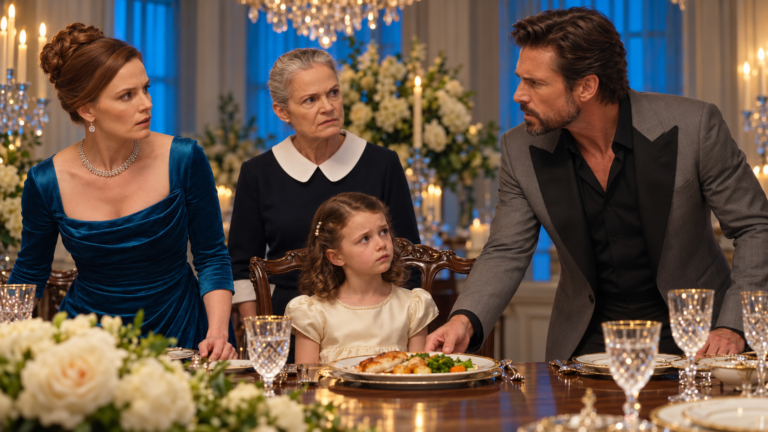
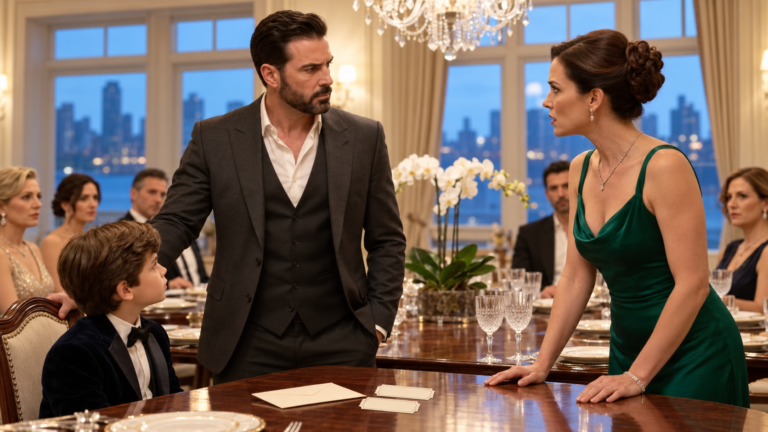
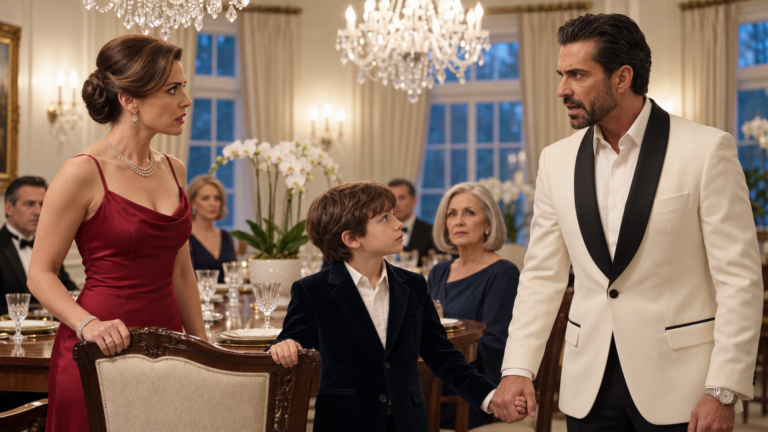
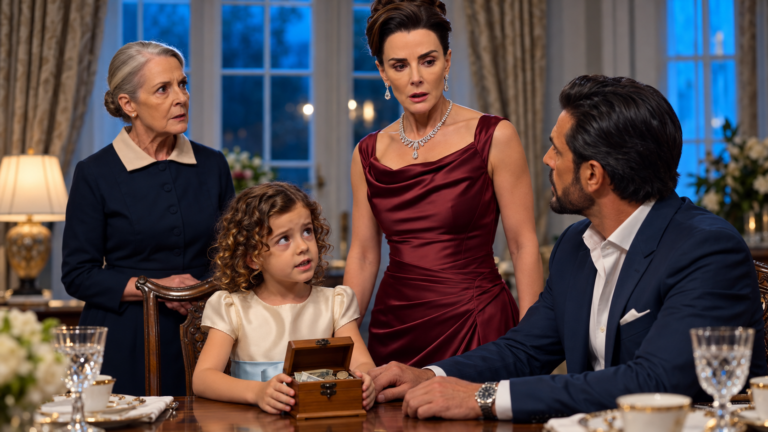
When he arrived downstairs, they gave him one clear plan.
He listened.
Then asked whether he could bring his model rocket.
“Yes,” Maren said.
His father added that the box would fit in the car.
The boy went to fetch it.
After he left, Maren looked toward the staircase.
“He used to listen for the answer under the answer.”
Vincent nodded.
“So did I.”
They did not become friends because one difficult dinner exposed a different problem.
But they became more careful about what their unfinished arguments asked their son to carry.
That helped.
It also made room for normal disagreements between Oliver and each parent.
He could dislike bedtime at his mother’s house without being asked whether he wanted to live with his father.
He could complain about his father’s cooking without being reminded how lucky he was.
A child’s complaint did not need to become evidence in an adult dispute.
Sometimes dinner was simply too salty.
I saw the empty suitcase again in September.
Oliver had pulled it from the cupboard to make a hospital for stuffed animals.
The teddy lay across a folded towel.
A rabbit appeared to have a bandaged ear.
“What’s happened here?” I asked.
“Moon landing.”
“That looks serious.”
“It wasn’t a good landing.”
He showed me the cardboard control panel beside the case.
The suitcase was a recovery room.
Not a vehicle.
Not a threat.
Just something with enough space for two injured astronauts and a small plastic dinosaur serving as their doctor.
I asked whether the zip needed to remain open.
“Yes. They need visitors.”
I sat on the floor.
We discussed the hospital rules.
No jumping on patients.
No taking somebody else’s biscuit.
Questions allowed.
That last rule appeared on a little card in Oliver’s handwriting.
When Vincent came home, the boy called him upstairs.
His first sound caught.
He paused.
Then called again.
His father came.
He didn’t arrive asking whether the room was tidy or whether the suitcase belonged outside the cupboard.
He asked whom he was visiting.
“The bear.”
“What happened?”
“Bad pilot.”