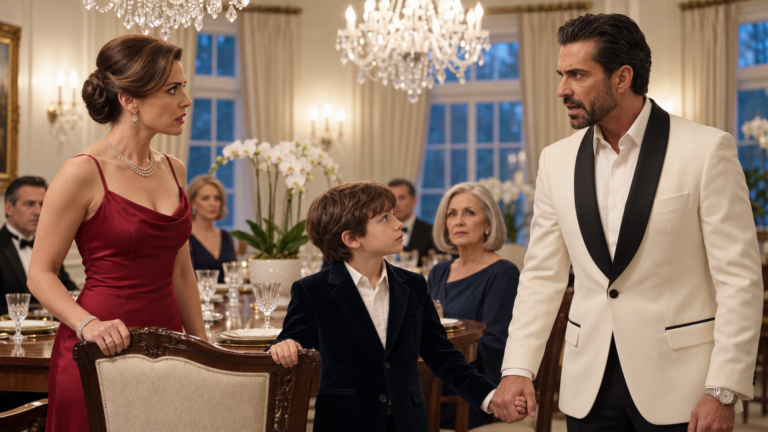
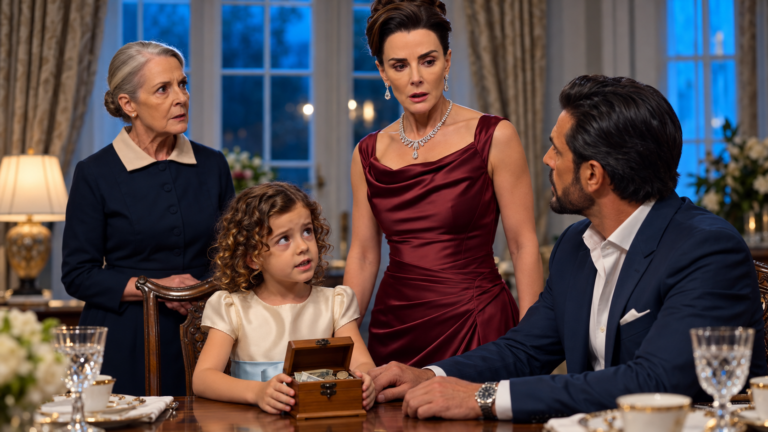
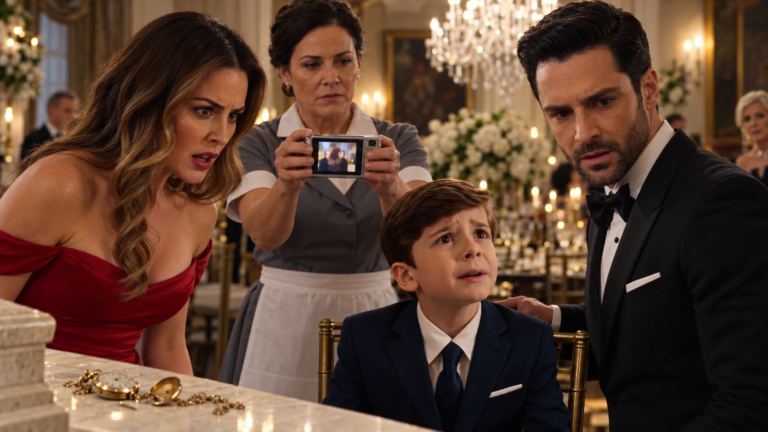
“I don’t think you knew.”
“No,” Frederick said. “I didn’t.”
There was no hug.
No instant reconciliation.
But the conversation ended without Teddy apologizing.
Sebastian considered that enough for one afternoon.
The apron remained in the kitchen laundry for several weeks before Teddy noticed it.
It was an ordinary striped apron.
The chef used several like it.
One afternoon, Teddy stopped in the doorway while Sebastian helped prepare sandwiches.
He stared at the hook.
“Is that mine?”
Sebastian followed his gaze.
“It’s one of the kitchen aprons.”
“The birthday one?”
“I’m not sure.”
His son stayed where he was.
Sebastian put down the knife.
“Would you like it moved?”
Teddy thought.
Then he shook his head.
“People use them.”
“Yes.”
“Jonah wears one when he fixes bikes.”
“Sometimes.”
“And Mum when she makes the sticky buns.”
“She does.”
Teddy looked at the apron again.
“So it wasn’t bad because of that.”
“No,” Sebastian said. “It was bad because of what you were told and because you weren’t allowed to stop and eat.”
His son nodded slowly.
A few weeks later, he asked to help the chef make cookies.
He chose a different apron because it had a pocket big enough for the timer.
Halfway through, he became bored.
“Can I go?”
The chef looked at the bowl.
“You can. First, wash your hands and put your spoon in the sink.”
Teddy did.
No adult told him leaving meant he was ungrateful.
The cookies baked.
He came back when the timer rang.
He ate one while it was still too hot.
Sebastian watched him blow on it and complain.
For the first time, the kitchen seemed to belong entirely to ordinary life again.
Near the end of the school year, Teddy’s class held an afternoon exhibition.
The children displayed models of places they thought mattered.
There were castles, football grounds, a zoo, and one ambitious attempt at an airport.
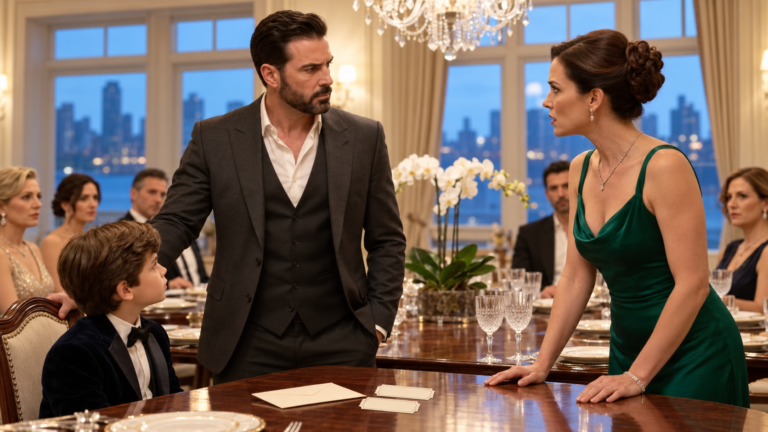
Teddy built a dining room.