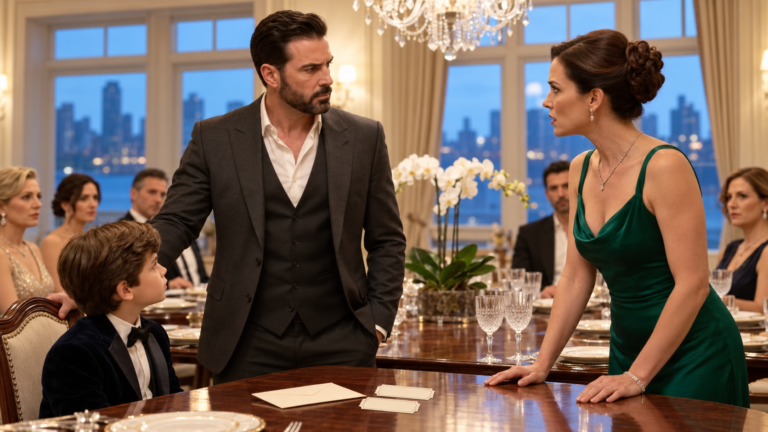
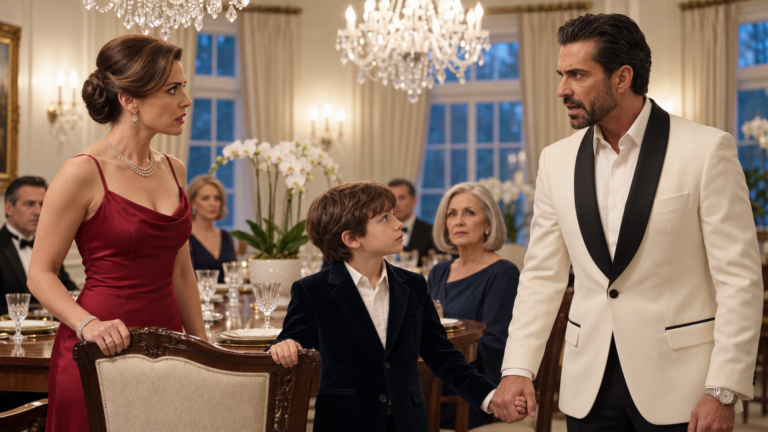
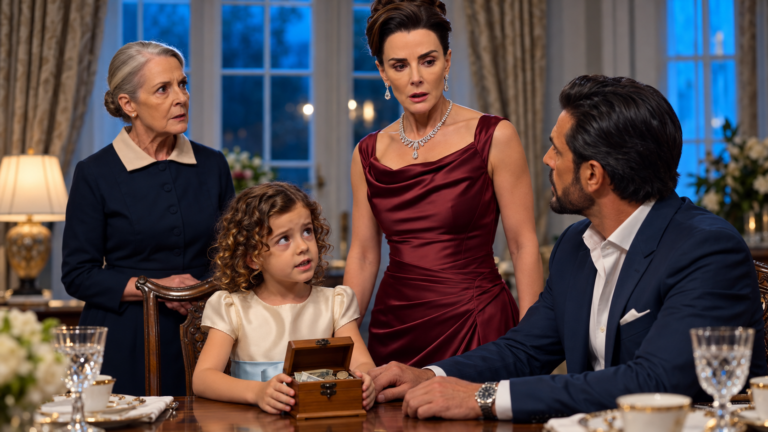
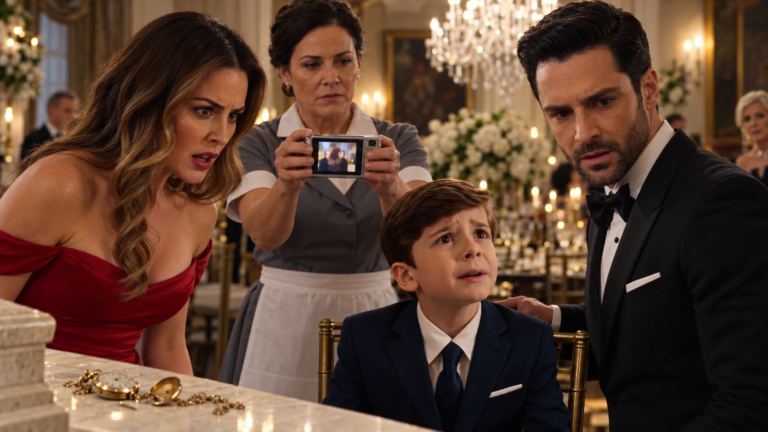
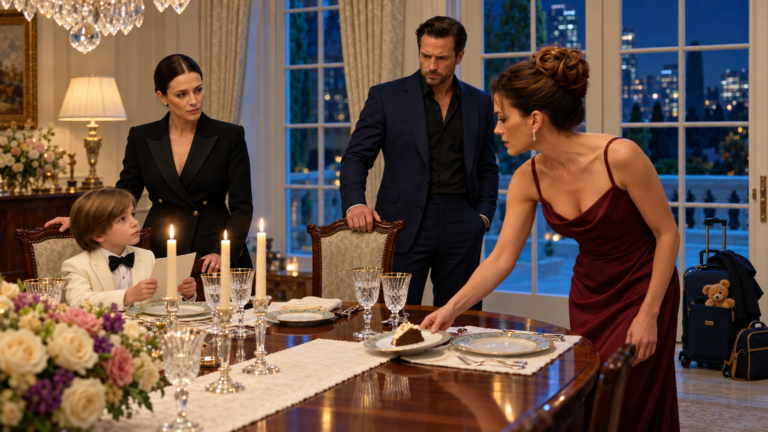
Sebastian said he would be home before dinner.
He remembered his own impatience.
“It sounded like a seating problem,” he said.
Rose looked tired.
“It became one.”
He lowered his eyes.
“What happened?”
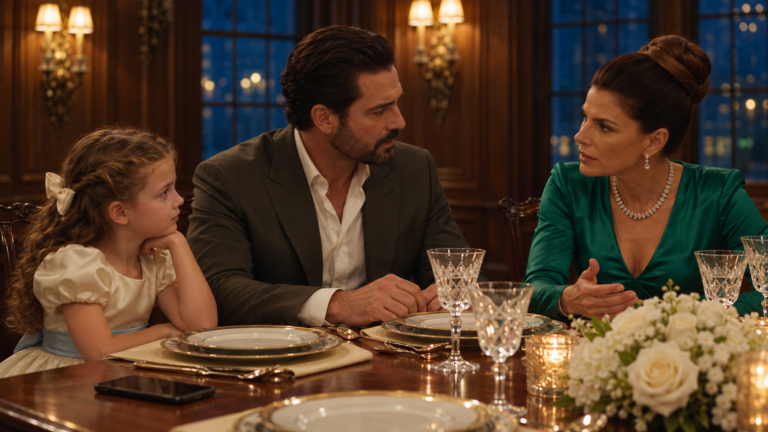
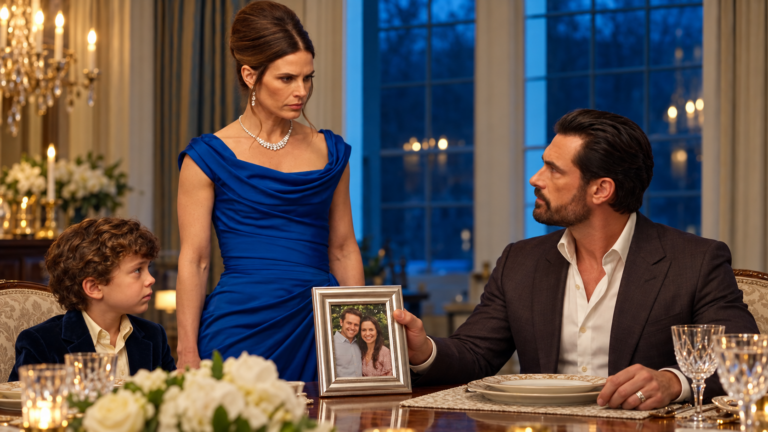
She described Teddy asking about his friends.
Lavinia telling him the dinner would be more sophisticated than a children’s party.
Teddy asking whether Nell could at least have cake.
Lavinia saying he was embarrassing her by inviting employees’ children into family occasions.
Rose objected.
Lavinia accused her of encouraging ingratitude.
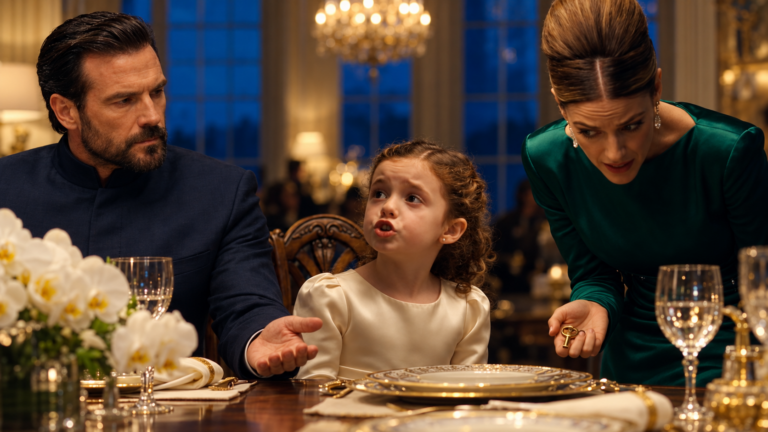
Then came the apron.
At first, Rose thought Teddy was helping carry bread, something he often enjoyed.
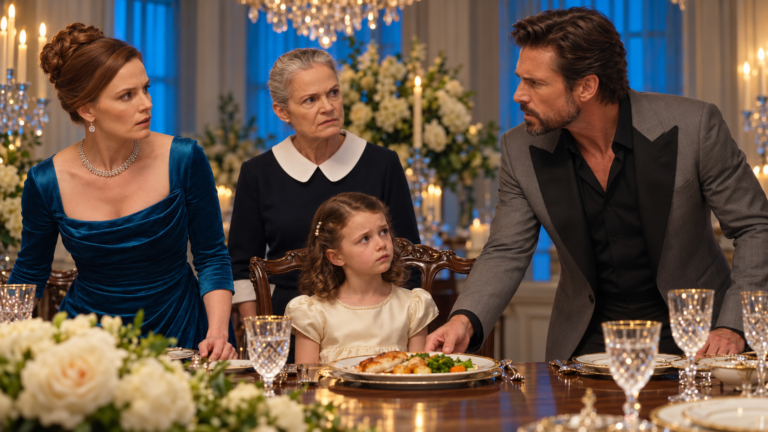
Then Lavinia moved his chair.
She explained the points.
When Rose told Teddy he could stop, Lavinia said refusing would prove he didn’t appreciate his father.
“He was frightened that stopping would make it true,” Rose said.
“Why didn’t you take him out?”
“I tried. He thought if he left before earning enough, you wouldn’t want him back at the table.”
Sebastian looked toward the breakfast room.
Mara was laughing softly at something.
He was grateful she could do that.
He could not have managed it at that moment.
Rose continued.
“I should have interrupted the meeting directly. I should have kept calling.”
“I should have answered.”
She nodded.
Neither needed the other to pretend one sentence settled it.
“Has she done this before?” he asked.
“Not the serving. Not like tonight.”
“But other things?”
Rose took a breath.
“There have been charts.”
Teddy called them “good-son pages.”
Some were ordinary.
Homework.
Putting shoes away.
Feeding the dog.
Others were not.
No asking for Dad during calls.
No complaining about changed plans.
No mentioning what Mum allows.
No crying when corrected.
Sebastian sat at the kitchen table while Rose described them.
“Where are they?”
“Lavinia kept most of them in her desk.”
“What did Teddy earn?”