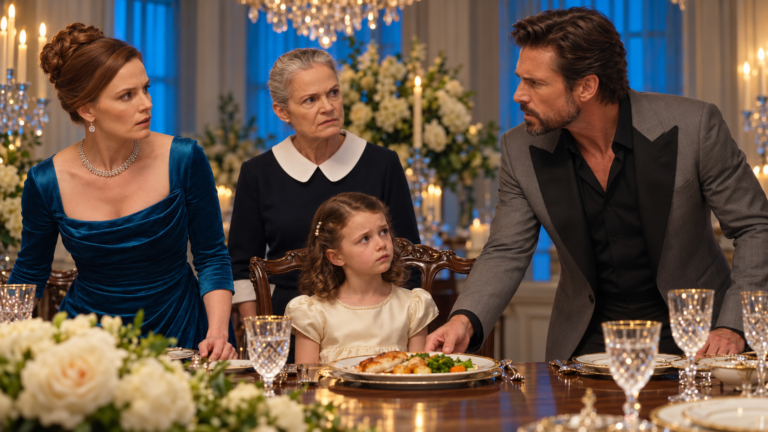
“Something to drink?”
Another small shake.
“All right.”
He waited.
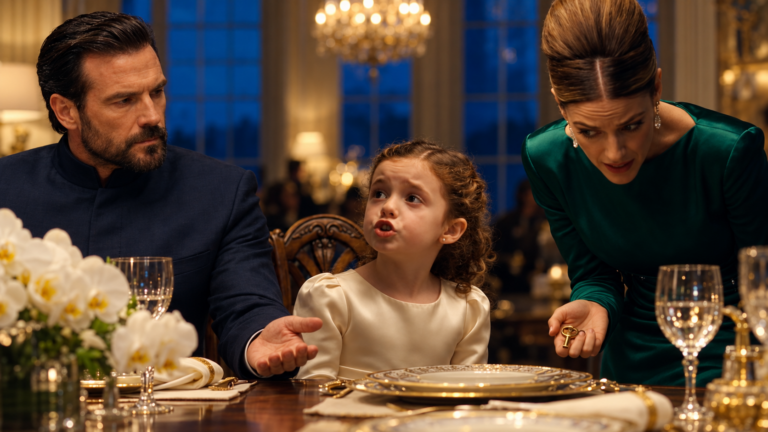
Poppy stared at the rug.
Then she said, “I know twelve is too many.”
“For what?”
“Calling.”
“Twelve calls tells me you were trying very hard to reach me.”
“But I kept doing it after she said.”
“What did she say?”
Poppy touched the edge of her sleeve.
“That you didn’t want me right then.”
Cassian kept his expression steady.
“And later?”
“She said I should know when to stop.”
Miriam’s face tightened.
Poppy continued.
“The third time, she said you were angry.”
“Did you hear my voice?”
“No.”
“Did you speak to me?”
“No.”
“But you believed she was telling you what I said.”
Poppy nodded.
“She had your phone.”
Cassian understood.
To an adult, a device was an object someone could pick up.
To his daughter, that number was a promise.
Viola had answered it.
The authority followed.
He moved closer.
“I should have made sure you had another way to reach me.”
Poppy looked up.
“Did you know she had it?”
“Yes.”
The answer hurt her.
He saw it.
He continued before she had to discover the rest through another adult.
“I knew I’d left it at home. I thought we would speak through the other phone or on the tablet.”
“But we didn’t.”
“No.”
His daughter looked down again.
“I know,” he said. “We didn’t.”
He did not ask her to make that sentence easier for him.
At first, Poppy called because she wanted to tell him something good.
Her class had chosen her drawing for the cover of the spring concert program.
It showed a row of children singing beneath paper stars.
One figure had enormous shoes because she couldn’t make the feet match.