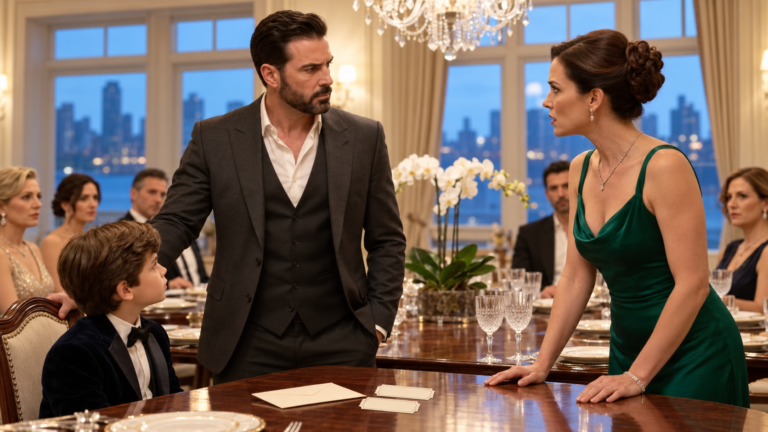
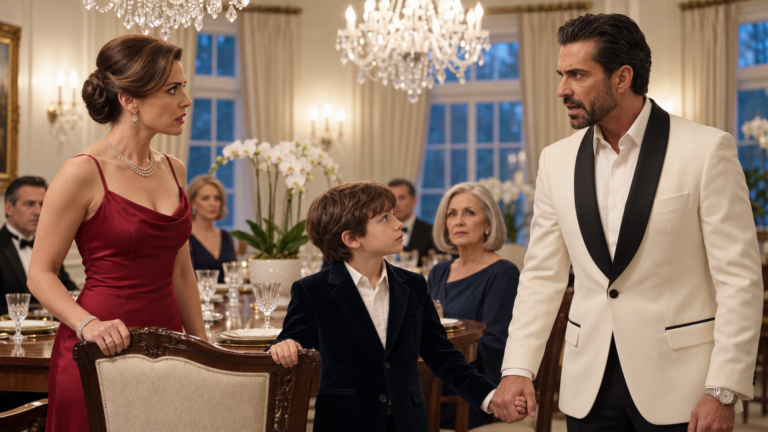
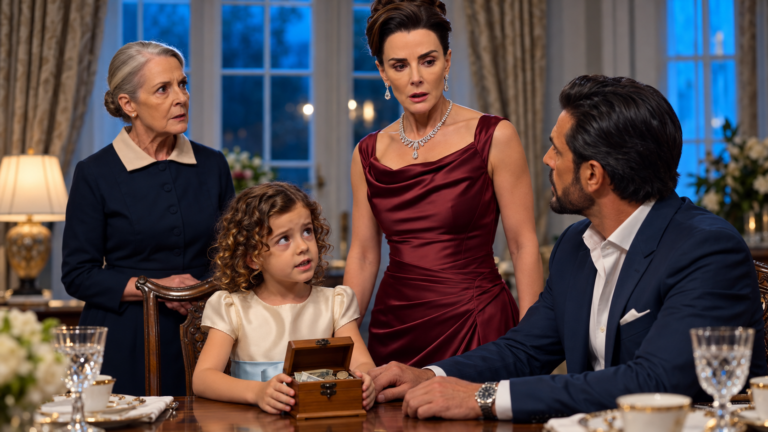
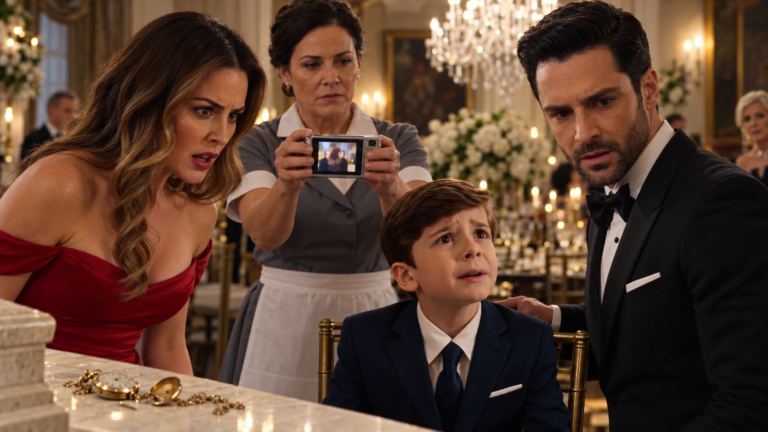
“Had I told you to say that?”
“No.”
“Did you tell her I was standing beside you?”
Viola rubbed her forehead.
“I needed her to stop asking.”
Cassian looked at her.
“That is not an answer.”
“Yes,” she said sharply. “I told her you were there.”
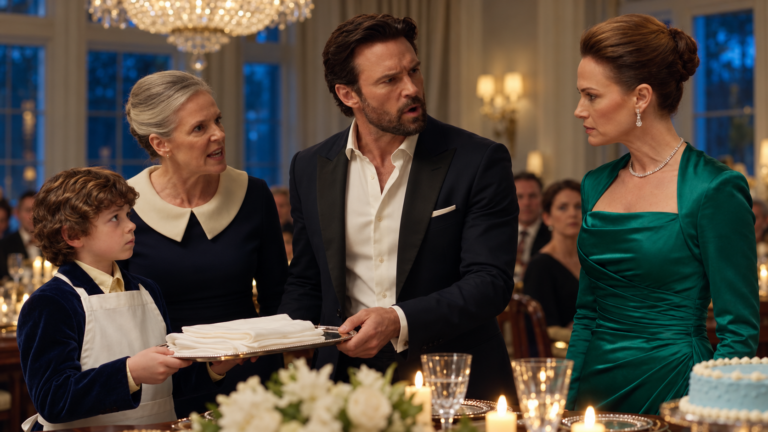
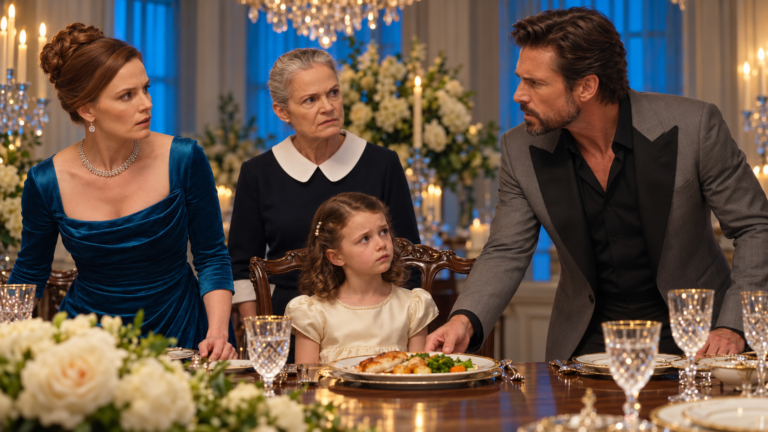
The room went quiet.
He had expected denial.
The admission was worse in its simplicity.
“You told my daughter I was refusing her while I was in another city.”
“I was trying to get through an afternoon without the same conversation twelve times.”
“Why was she having it twelve times?”
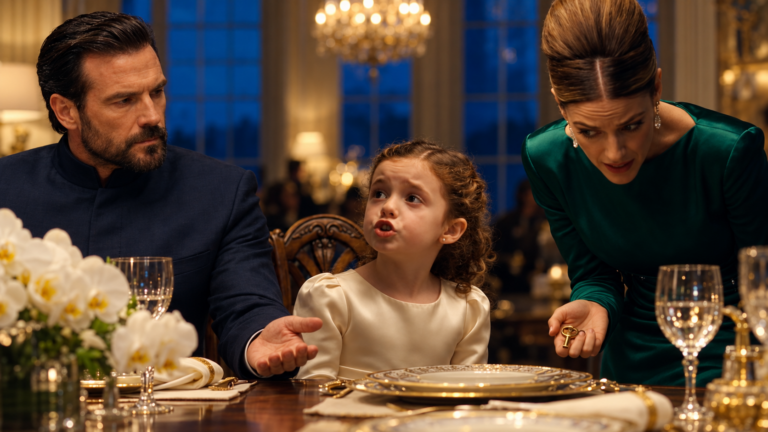
“Because she doesn’t accept no.”
“Because you made her believe she had lost me.”
Viola’s face changed.
“You’re making this sound deliberate.”
He looked toward the phone.
“You answered again.”
She said nothing.
“And again.”
“Cassian—”
“You had time to change what you were doing.”
Viola folded her arms.
“I had time to see what happens when nobody gives that child boundaries.”
He understood then that she still thought the central problem was Poppy’s persistence.
Not the lie that made persistence feel necessary.
Viola had been part of their lives for nearly two years.
She could be thoughtful.
She knew which coffee Cassian preferred. She once spent three hours helping Helena organize a hospital fundraiser after a supplier canceled.
With Poppy, she initially seemed patient.
They made Christmas biscuits.
They chose flowers for the terrace.
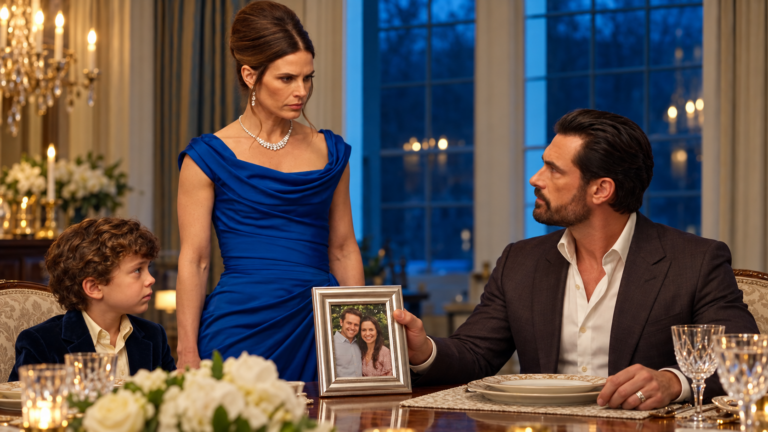
Poppy drew a picture of the three of them and asked whether Viola wanted the blue dress or the green one.
Cassian remembered how pleased he had been.
He remembered thanking Viola for understanding that his daughter came first.
Now he wondered what she heard in that sentence.
An assurance.
A warning.
A competition she intended to win.
“I was going to marry you,” he said.
Her expression softened immediately.
“I still want that.”
“Then why did my daughter need to believe I didn’t want her?”
Viola looked away.
“She doesn’t leave any room.”
“For what?”
“For us.”