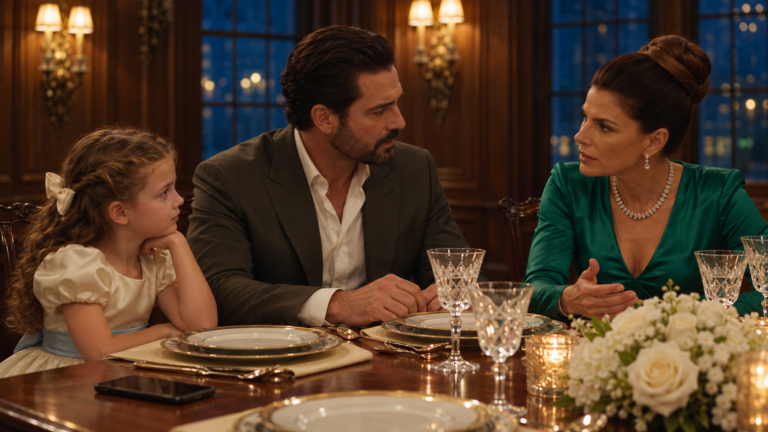
“If I didn’t, would she stay?”
I took a breath.
“I might have taken longer to understand what was happening.”
Her face changed.
“But learning the truth was my responsibility,” I added. “You did not end our marriage by asking me a question.”
She pressed her hands together.
“Did you like her before?”
“Yes.”
“Did I make you stop?”
“No.”
She watched me.
“Adults can have feelings about each other and still be responsible for what they do.”
Ella was quiet.
Then she asked whether it was wrong to remember the day Seraphina took her to an aquarium.
“No.”
“But I don’t want her back.”
“You can remember a good day without wanting the old arrangement back.”
She looked relieved.
Her memories did not need to become perfectly consistent before she was allowed to feel safe.
That was something I needed to learn too.
There had been good moments in the marriage.
They did not cancel the envelope in the drawer.
When Seraphina’s things were collected, Ella was at school.
She knew it was happening.
She knew her room would not be touched.
I made sure no one asked her to decide which objects belonged to whom.
That was adult work.
Afterward, she noticed a lamp missing from the sitting room.
She liked that lamp.
She said so.
I didn’t tell her the room was better without it.
We found another lamp together.
It wasn’t a symbolic trip.
She needed somewhere comfortable to read.
At the shop, she chose the simplest one.
Then she asked whether liking it meant she had forgotten the other.
“No.”
“Can I like both?”
“Yes.”
She nodded.
For a while, she treated many choices that way.
A new routine did not have to erase an old memory.
A safe person did not require disliking every unsafe one.
Money returned did not make the original taking acceptable.
She was learning distinctions adults often avoided because they complicated a tidy story.
I tried to keep answering honestly.
Sometimes I needed time to find the words.
When I did, I told her.
Then I came back with an answer.