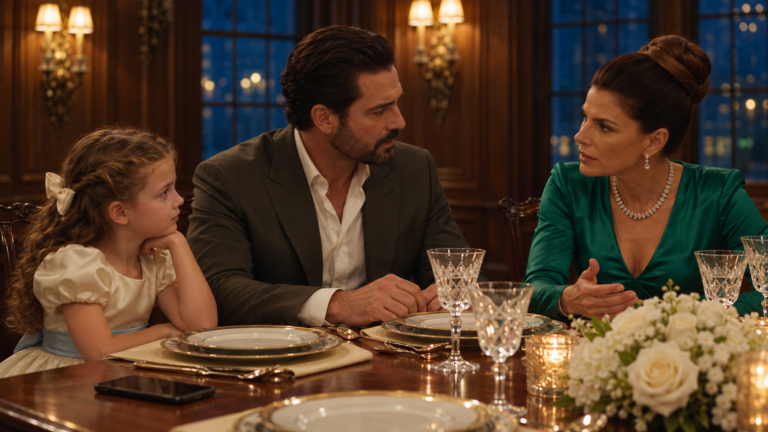
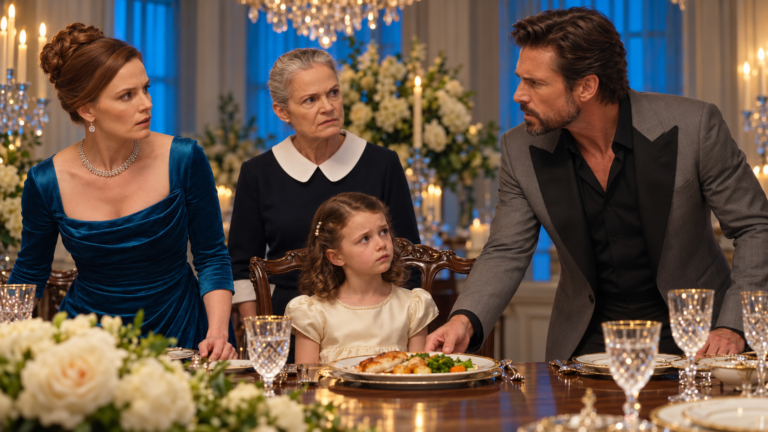
The place where I worked.
The doorway my daughter had been paying to cross.
“This has been handled very badly,” she said.
I closed the door.
“Yes.”
“You let the staff accuse me in front of everyone.”
“You took money from Ella.”
“I was teaching her about boundaries.”
“How much?”
She looked away.
“Small amounts.”
“How much?”
“I didn’t keep a bank account for a child’s little lesson.”
“Then start with what you remember.”
She sighed.
As though I was being deliberately literal about something everyone sensible should understand.
“She kept coming into your office.”
“She’s my daughter.”
“You were working.”
“Then you could have told me she needed me.”
“You asked me to manage things.”
“I did not ask you to sell her time with me.”
Seraphina’s face hardened.
“That is an ugly way to put it.”
“It is what she thought she was buying.”
“She takes everything so seriously.”
“She is eight.”
My wife looked toward the door.
I waited.
Then I asked again:
“Where’s her money?”
Some of it was in an envelope in Seraphina’s dressing-room drawer.
Some was in her purse.
She said she had intended to return it once Ella understood the value of other people’s time.
I asked when that would have happened.
She said there had been no fixed date.
I asked what Ella needed to do to earn the money back.
She said that wasn’t the point.
It was precisely the point.
There had been no lesson the child could finish.
Only a system in which Seraphina decided when affection had become expensive.
She produced the envelope.
Inside were folded notes and several small slips of paper.
Dates.
Amounts.
Occasionally a word.
Office.
After dinner.
Late.