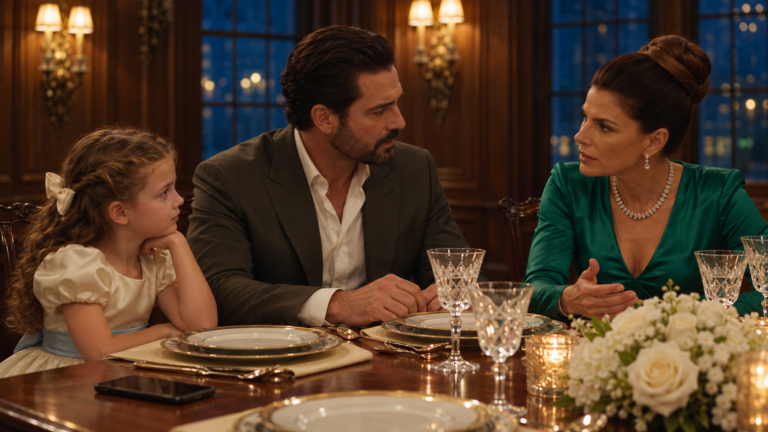
“I wasn’t thinking.”
“I know.”
He apologized to her without asking her to laugh.
She nodded.
The conversation moved on.
Later, she asked whether I was angry with him.
“A little.”
“Will he still come?”
“Probably. He made a mistake and accepted the correction.”
She considered that.
“Different from before.”
“Yes.”
Not every wrong word required exile.
Not every apology restored trust.
Ella needed to see adults make distinctions without asking her to absorb every consequence.
The cousin did not make the joke again.
When he visited the following month, he asked about the skates.
She told him about the wheels.
He listened.
An ordinary relationship continued after an ordinary correction.
That was useful too.
We could not build a world where nobody ever hurt her.
We could build one where hurt was acknowledged, boundaries were clear, and she was not expected to protect adults from knowing what they had done.
I had to leave for work in October.
Four nights.
Ella knew in advance.
She would stay with Miriam.
Nadine would help with the usual arrangements.
We explained when I expected to return and how we would speak while I was away.
The night before, she brought the wooden box downstairs.
I felt a familiar coldness.
Then she opened it.
Inside were a few notes, coins, a shell, and a photograph of her new skates.
“I want Mom to keep it there.”
“At her house?”
She nodded.
“Just while I’m there.”
“That’s fine.”
She looked at me.
“Not because I need it.”
“I understand.”
She closed it.
The box had begun returning to its original purpose.
A place for money and private treasures.
Not a measure of how much her father she could afford.
On the second night of my trip, our call was delayed.
A meeting ran over.
I sent a clear message through Miriam before the time passed.
Ella was disappointed.